
Do Your Dog Treats Hide Synthetic Preservatives?
Last Updated: October 25, 2026
Quick Summary
Signs of synthetic preservatives in dog treats appear on the ingredient list, not in the bag, because preservatives are invisible and have no smell or taste. Scan the last third of the list for names like BHA, BHT, TBHQ, ethoxyquin, propyl gallate, potassium sorbate, and sodium benzoate. A rancid smell or visible mold signals spoilage, not which preservative was used.
- Ingredients are listed by weight, so preservatives usually appear near the end of the list.
- BHA and BHT are the two synthetic antioxidants you will see most often on treat labels.
- Natural options include mixed tocopherols, rosemary extract, ascorbic acid, and citric acid.
- Moist treats more often carry antimicrobials like potassium sorbate or sodium benzoate than dry biscuits.
- A single treat with BHA or BHT is unlikely to cause harm in most dogs.
Table of Contents
- What Synthetic Preservatives in Dog Treats Actually Do
- How to Read Dog Treat Ingredient Labels Like a Pro
- BHA and BHT in Dog Treats: What the Evidence Says
- Natural Preservatives for Dog Treats: What to Look For Instead
- Signs Dog Treats Have Gone Bad (and How to Tell Them Apart from Preservatives)
- Other Additives to Avoid: Artificial Colors, Sweeteners, and Binding Agents
- What to Do If Your Dog Ate a Treat With Synthetic Preservatives
- Choosing Cleaner Treats for Your Dog
- Frequently Asked Questions
What Synthetic Preservatives in Dog Treats Actually Do
Synthetic preservatives are chemical additives that slow spoilage and extend shelf life in commercial dog treats. They keep fats from going rancid and stop mold and bacteria from growing.
But here is the tension most guides skip: a preservative doing its job is invisible. You cannot see it, smell it, or taste it.
Preservatives fall into two broad jobs: antioxidants that protect fats, and antimicrobials that block mold and bacteria. Both matter for food safety. The question is what else comes along with them.
How to Read Dog Treat Ingredient Labels Like a Pro
Reading a dog treat label well means checking three things: the ingredient list order, the chemical names you do not recognize, and whether front-of-package claims match the fine print. Ingredients are listed by weight, heaviest first. If a preservative appears near the end, the amount is small. If several appear together, that is a clue worth noting.
A Practical Label Walkthrough for Treats
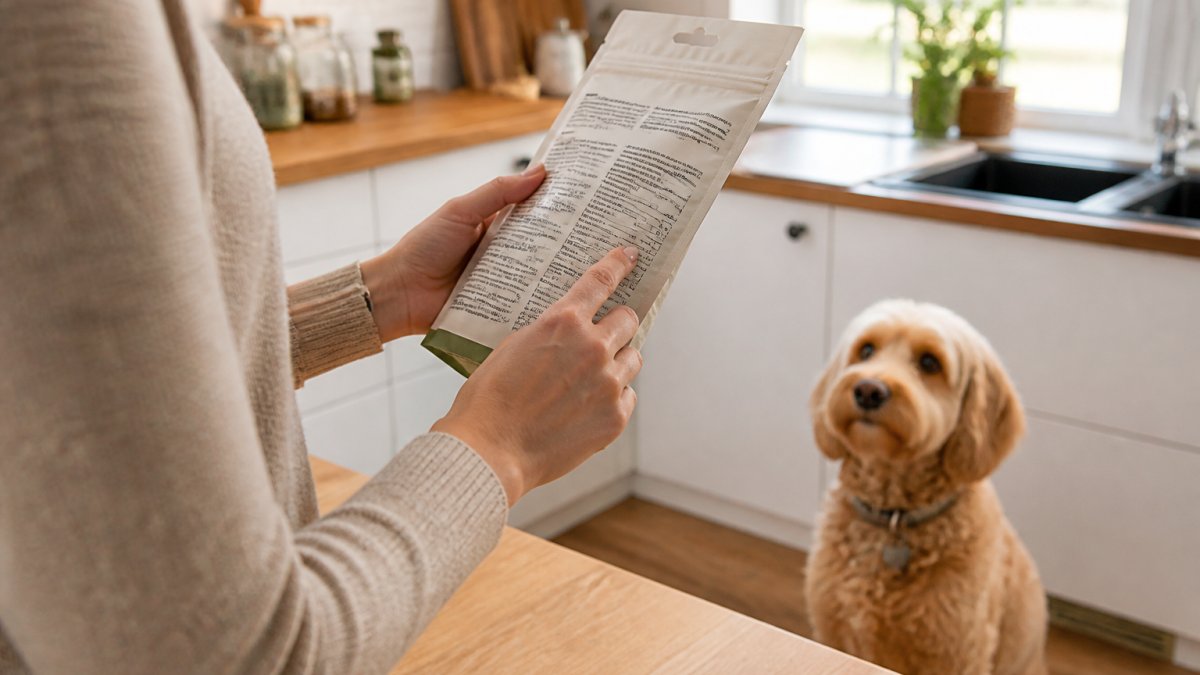
Treat labels are not laid out like food labels for people, and that trips readers up. Here is the order to scan, top to bottom:
- Find the ingredient list first, not the front of the bag. Front-of-package claims are marketing; the ingredient list is the legal disclosure. On most treat bags it sits on the back or side panel, often in small type near the guaranteed analysis.
- Read the first five ingredients. These make up the bulk of the treat by weight. If the first five are recognizable proteins, grains, or vegetables, the base formula is simpler. If the first five include syrups, starches, or unnamed "meals," keep reading.
- Scan the last third of the list for preservatives. Antioxidants and antimicrobials are used in small amounts, so they usually appear near the end. This is where BHA, BHT, TBHQ, ethoxyquin, propyl gallate, potassium sorbate, and sodium benzoate tend to sit.
- Check the guaranteed analysis for moisture. Moisture content tells you how much preservation the treat actually needs. A soft, moist treat with high moisture is a harder preservation problem than a dry biscuit, which is why moist treats more often carry antimicrobials.
- Compare the front claim to the list. "No artificial preservatives" should mean none of the synthetic names appear. If the list still shows BHA or BHT, the front claim is misleading.
Where Preservatives Hide on the Ingredient List
Preservatives rarely announce themselves. Watch for these names:
- BHA (butylated hydroxyanisole)
- BHT (butylated hydroxytoluene)
- Ethoxyquin
A common mistake is assuming "no artificial preservatives" on the front means none inside. Check the list yourself.
Alternate Names and Label Variations to Recognize
Synthetic preservatives do not always appear under their common initials. Depending on the manufacturer and the label format, you may see:
- BHA written as butylated hydroxyanisole
- BHT written as butylated hydroxytoluene
- TBHQ written as tert-butylhydroquinone
A useful habit: if a word in the last third of the list is long, chemical-sounding, and you cannot picture the food it came from, look it up before you buy. The FDA's guidance on animal food ingredients explains how additives are reviewed and labeled.
Decoding Front-of-Package Claims
"Natural," "premium," and "wholesome" are marketing words with loose definitions. "Organic" is different: it is a certified claim. If you want to confirm which certifications actually back a clean-label promise, our guide on third-party certification for dog treats walks through what each seal verifies.
Here is the top-to-bottom scan order for spotting preservatives on a treat bag.
| Step | What to check | Why it matters |
|---|---|---|
| 1 | Find the ingredient list, not the front of the bag | Front claims are marketing; the list is legal disclosure |
| 2 | Read the first five ingredients | They make up the bulk of the treat by weight |
| 3 | Scan the last third for preservatives | Antioxidants and antimicrobials are used in small amounts |
| 4 | Check guaranteed analysis for moisture | Moist treats more often carry antimicrobials |
| 5 | Compare front claim to the list | "No artificial preservatives" should mean none appear |
BHA and BHT in Dog Treats: What the Evidence Says
BHA and BHT are the two synthetic antioxidants you will see most often. The evidence against them in dogs is not as clear-cut as headlines suggest. No single study has proven these additives cause disease in dogs at typical serving levels, though the effects of chronic lifetime exposure remain an open question, as noted in GoodBark's analysis of artificial preservatives in dog food.
That is not a green light. It is a dose-and-duration question. Some concerns raised in animal studies include liver and kidney effects and tumor promotion at high doses. The FDA's guidance on animal food ingredients is the place to check how additives are reviewed.
Our take: if you can avoid daily exposure cheaply, why not? Small choices add up over a dog's life.
Natural Preservatives for Dog Treats: What to Look For Instead
Natural preservatives for dog treats include vitamin E (mixed tocopherols), vitamin C (ascorbic acid), rosemary extract, and citric acid. These work more gently than synthetics, which usually means a shorter shelf life.
Look for these on labels:
- Mixed tocopherols
- Rosemary extract
- Ascorbic acid
One insider note: natural preservatives are less effective at blocking mold in moist treats. If you are weighing whether human-grade standards mean fewer additives, our guide on whether human grade is better for dogs covers it.
Dog Mamma's Organic Peanut Butter Banana Recipe - USDA Organic Certified Dog →
Signs Dog Treats Have Gone Bad (and How to Tell Them Apart from Preservatives)
This is the section where most guides blur two different questions. The keyword asks for signs of synthetic preservatives, but the honest answer is that preservatives usually cannot be identified by sight, smell, or taste. What you can detect are signs of spoilage. Treat them as separate checks.
Why Sensory Clues Cannot Identify Preservatives
A synthetic preservative doing its job is invisible. It has no color, no smell, and no taste at the amounts used in treats. That means:
- A treat with BHA or BHT can look, smell, and taste completely normal.
- A preservative-free treat can also look and smell normal for weeks.
- A rancid smell tells you fat has oxidized, not which preservative was used.
So when you see a list of "signs of synthetic preservatives," read it as a list of spoilage signs. The label is the only reliable place to confirm what preservative was used.
Signs Dog Treats Have Gone Bad
Signs dog treats have gone bad are sensory, not chemical. You are looking for spoilage, not preservatives. Watch for:
- A rancid, paint-like, or sour smell
- Visible mold, fuzz, or discoloration
- Sticky, wet, or slimy texture where it should be dry
- A change in color, especially dark or greasy patches
- Pests or holes in the packaging
Here is the part most people get wrong: a treat with synthetic preservatives can still spoil, and a preservative-free treat can smell fine for weeks. Sensory clues cannot reliably identify preservatives. They only tell you about freshness.
Treat-Specific Storage, Packaging, and Shelf-Life Clues
Preservation choices show up in how a treat is packaged and how long it is meant to last. These clues do not prove a synthetic additive is present, but they tell you what kind of preservation system the manufacturer built around the product.
- Packaging format. Individually wrapped treats, nitrogen-flushed bags, and resealable pouches are signs the maker is managing oxygen and moisture. A simple paper bag with a fold-over top offers less protection and often pairs with a shorter shelf life.
- Expiration and best-before dates. A long shelf life on a moist treat is a signal that some preservation system, natural or synthetic, is doing heavy lifting. A short dated window on a dry biscuit is normal.
- Storage instructions on the bag. "Refrigerate after opening" or "use within two weeks of opening" tells you the product is not heavily preserved against mold once air hits it.
Always check the expiration or best-before date, and store treats in a cool, dry place in a sealed container. Once a bag is open, follow the storage instructions on the package rather than assuming the original shelf life still applies.
Other Additives to Avoid: Artificial Colors, Sweeteners, and Binding Agents
Beyond preservatives, three additive groups deserve a second look. Artificial colors like Red 40 and Yellow 5 add visual appeal, not nutrition. Artificial sweeteners, including xylitol, are dangerous: xylitol is toxic to dogs and can cause dangerous blood sugar drops. Binding agents and recombined ingredients hold a treat's shape but can mask lower-quality components.
None of these improve nutritional benefit. They improve appearance, texture, or cost. Read past them.
What to Do If Your Dog Ate a Treat With Synthetic Preservatives
Do not panic. A single treat with BHA or BHT is unlikely to cause harm in most dogs. If your dog's stomach is upset, our roundup of the best dog treats for sensitive stomachs offers gentler options.
Watch out: xylitol is the exception. If a treat contains xylitol, treat it as an emergency and call your vet or a pet poison hotline right away.
Choosing Cleaner Treats for Your Dog
Cleaner treats share a few traits: short ingredient lists, recognizable names, and a real certification. You can see every ingredient, and our Organic Sweet Potato & Kale Recipe lists exactly what goes in.

If you want more options, our guide to the best organic dog treats compares picks. Choosing cleaner is not about perfection. It is about knowing what is in the bag.
Frequently Asked Questions
How can you tell if dog treats contain synthetic preservatives?
The only reliable way is to read the ingredient list. Look for names like BHA (butylated hydroxyanisole), BHT (butylated hydroxytoluene), ethoxyquin, propyl gallate, and potassium sorbate. These are the most common synthetic preservatives in commercial pet food and treats. Front-of-package claims like 'natural' or 'premium' are not proof either way. Sensory clues such as smell or texture cannot confirm the presence of synthetic preservatives, so the label is your best tool.
Are BHA and BHT in dog treats harmful?
The evidence is not conclusive. No single study has proven that BHA or BHT cause disease in dogs at typical serving levels, according to GoodBark's review of the research. However, the effects of chronic lifetime exposure remain an open question. Some studies in other species have raised concerns about tumor promotion at high doses. If you want to minimize exposure, choose treats preserved with natural antioxidants like mixed tocopherols or rosemary extract, or treats with a short shelf life and simple ingredient lists.
Can dog treats be preserved without synthetic additives?
Yes. Natural preservatives for dog treats include mixed tocopherols (vitamin E), rosemary extract, citric acid, and ascorbic acid (vitamin C). These antioxidants slow oxidation and help maintain freshness, though they may not last as long as synthetic options. Many small-batch and USDA Organic Certified brands rely on these natural preservatives plus proper packaging and short shelf lives. Check the best-before date and store treats in a cool, dry place to extend freshness.
What should I do if my dog ate a treat with synthetic preservatives?
Don't panic. At typical serving levels, the evidence does not show that synthetic preservatives cause immediate harm. Watch your dog for vomiting, lethargy, or seizures, and contact your veterinarian if any of these occur. If your dog ate a large amount of treats or the packaging, call your vet or a pet poison helpline. Going forward, switch to treats with transparent ingredient lists and natural preservation, and keep a note of what your dog ate in case symptoms appear.
The hardest part of cleaner feeding is not finding better treats. It is trusting that the label means what it says. Dog Mamma's was built for that gap: USDA Organic Certified, human-grade and plant-based ingredients, small-batch handcrafted production, and a supply chain free from pesticides and GMOs. Get started with Dog Mamma's and give your dog treats you can actually read.
