
Is Human Grade Better for Dogs? A 2026 Guide
Table of Contents
- Is Human Grade Better for Dogs? The Honest Answer
- AAFCO Human Grade Definition: What the Label Legally Means
- How to Read Dog Food Labels Without Getting Fooled
- Human-Grade vs. Kibble, Homemade, and Raw: A Practical Comparison
- Benefits of Organic Dog Treats and Human-Grade Rewards
- Cost, Storage, and Transitioning: The Practical Trade-Offs
- When to Ask Your Veterinarian or a Veterinary Nutritionist
- Conclusion: Making the Right Call for Your Dog
- Frequently Asked Questions
Last Updated: October 7, 2026
Is Human Grade Better for Dogs? The Honest Answer
Is human grade better for dogs? Not automatically. The label describes how food was handled and inspected, not whether the recipe meets a dog's nutritional needs. At Dog Mamma's, we built our treat kitchen around USDA Organic certification and human-grade, plant-based ingredients, so we have a stake in this debate, but the label matters, and it is not the whole story.

What the Research Actually Shows
The strongest evidence for human-grade diets is about digestibility, not miracles. When a diet is made from recognizable whole foods and processed gently, dogs tend to absorb more of what they eat, which often shows up as smaller, firmer stools. Research does not show that "human-grade" on a bag predicts longer life, fewer allergies, or better behavior.
Where the Hype Outruns the Evidence
Marketing has stretched the term far past its legal meaning. You will see "human-grade" used to imply "healthier," "safer," or "closer to homemade." None follow automatically: a human-grade facility can still produce an unbalanced recipe. The label tells you about handling standards, not nutritional quality, the most important distinction to carry into the pet aisle.
AAFCO Human Grade Definition: What the Label Legally Means
The AAFCO human grade definition is narrower than most owners expect. It means every ingredient and the finished product were stored, handled, processed, and held to federal standards for human edible food. It says nothing about whether the recipe is nutritionally complete for a dog.
Feed-Grade vs. Human-Grade: The Real Difference
Feed-grade ingredients are handled under feed regulations, which permit facilities, storage, and sourcing that human food rules do not. Human-grade means the entire supply chain, from ingredient to finished bag, meets human edible standards. The practical difference is inspection rigor and traceability, not guaranteed nutrition. A human-grade diet is not automatically better balanced than a feed-grade one; it is held to a stricter handling standard.
How to Read Dog Food Labels Without Getting Fooled
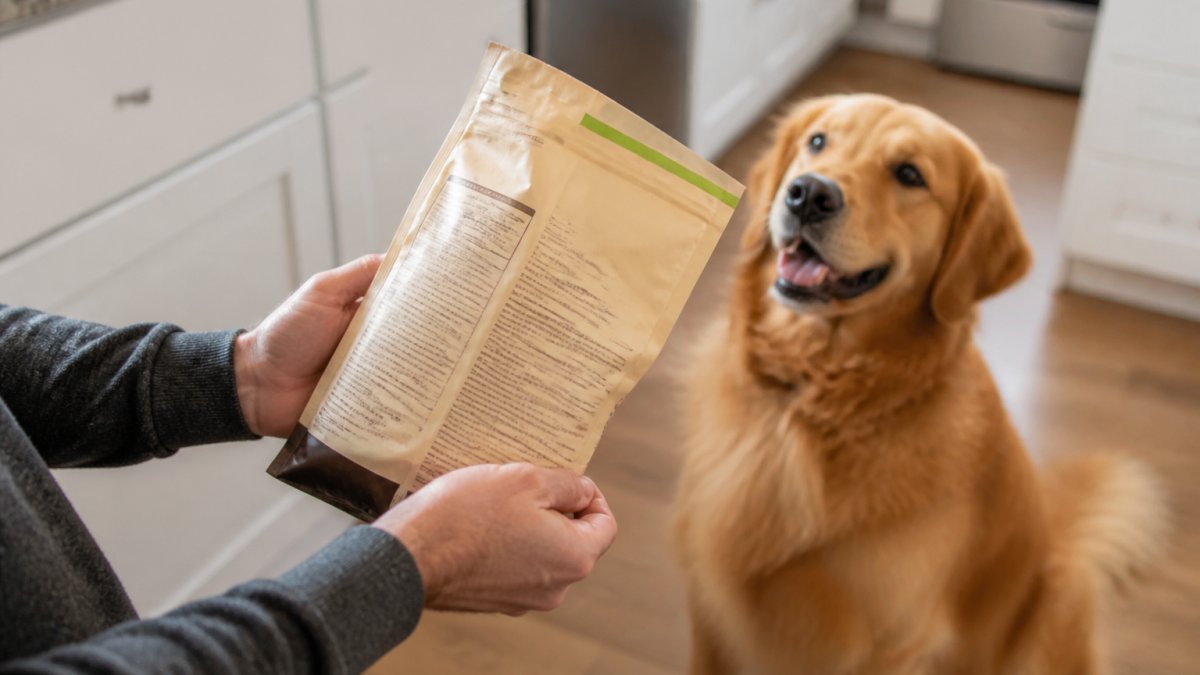
Reading a dog food label is a skill, and the front of the bag is designed to distract you. The back panel is where the facts live.
Nutritional Adequacy Statements and Life Stage Claims
Every complete diet carries one of three statement types, and the wording tells you how the claim was established:
- "Formulated to meet the AAFCO Dog Food Nutrient Profiles for [life stage]", calculated on paper to hit nutrient targets, no feeding trial. The most common and weakest form of evidence.
- "Animal feeding tests using AAFCO procedures substantiate that [product] provides complete and balanced nutrition for [life stage]", fed to dogs under a defined protocol. Stronger evidence, less common because trials are expensive.
- "This product is intended for intermittent or supplemental feeding only", a legal way of saying the food is not complete. Treats, toppers, and many mixers carry this. It is not a full diet.
The life-stage slot matters as much as the statement type. The recognized profiles are growth (puppy), adult maintenance, and all life stages. "All life stages" must meet the stricter growth targets, so it is not interchangeable with "adult maintenance." Large-breed puppies are the classic failure point: they need controlled calcium and phosphorus ratios during growth, and an adult-adequate diet can be wrong for them.
Ingredient Splitting and Other Label Tricks
Ingredients are listed by weight before processing, which creates two well-known distortions. Ingredient splitting breaks one ingredient into several entries so it appears lower on the list, "chicken, chicken meal, chicken fat" can push a less desirable filler higher by combined weight. Water weight inflates fresh ingredients: a named protein that is mostly moisture can outrank a nutrient-dense meal that weighs less but delivers more protein per cup.
Watch for vague terms too. "Meat meal," "animal digest," and "poultry by-product meal" tell you little about species or sourcing, while "chicken meal" and "beef" name the source. The FDA guidance on pet food labeling explains what manufacturers are and are not required to disclose, and it is worth reading before your next purchase.
How to Verify a Claim Instead of Trusting It
Here is how to check whether a claim is real.
- "Complete and balanced", find the AAFCO statement on the back or side panel. If it is missing, the food is not complete, no matter what the front says.
- "Human-grade", a handling and sourcing claim, not a nutrition claim. It does not substitute for an adequacy statement.
- "Organic", look for the USDA Organic seal. Products with at least 95% organic ingredients may use the seal; products at 70-94% organic may only say "made with organic ingredients." The USDA National Organic Program overview explains what the certification actually verifies.
A 60-Second Label Check
- Find the AAFCO statement. Confirm the life stage matches your dog.
- Confirm the statement type, feeding trial beats formulated.
- Scan the guaranteed analysis for protein, fat, and fiber minimums.
- Read the first five ingredients, mentally combining split entries.
- Look for the USDA Organic seal if organic sourcing matters to you.
If a bag fails step one, nothing else on the label rescues it.
Human-Grade vs. Kibble, Homemade, and Raw: A Practical Comparison
Each format solves a different problem, and none wins across the board. Kibble is convenient and shelf-stable. Fresh and human-grade diets offer higher digestibility. Homemade gives you total control but is the hardest to balance correctly. Raw carries the highest handling risk.
Pros and Cons of Each Option
- Conventional kibble: Pros are cost, convenience, and reliable completeness. Cons are lower digestibility and heavier processing.
- Human-grade fresh or cooked: Pros are digestibility, traceability, and ingredient quality. Cons are cost, refrigeration, and shorter shelf life.
- Homemade diet: Pros are full control of ingredients. Cons are high risk of nutritional gaps without a formulated recipe.
| Option | Best For | Main Trade-Off |
|---|---|---|
| Kibble | Budget and convenience | Lower digestibility |
| Human-grade fresh | Owners prioritizing ingredient quality | Cost and storage |
| Homemade | Owners who will use a formulated recipe | Risk of imbalance |
| Raw | Experienced owners with strict hygiene | Contamination risk |
Benefits of Organic Dog Treats and Human-Grade Rewards
Organic certification is the part of this puzzle with real third-party teeth. It is also why we built our entire treat line around it.

The benefits of organic dog treats show up most clearly during training. Our USDA National Organic Program overview explains what the certification actually verifies, which is more than most "natural" claims on a bag.
Cost, Storage, and Transitioning: The Practical Trade-Offs
Human-grade food costs more because the supply chain costs more. Human edible ingredients, cold storage, and shorter shelf life all add up, and that price gap is real, not marketing. The question is whether the trade-off fits your dog and your budget.
The Real Cost Per Day
The sticker price on a bag is not the cost of feeding your dog. Cost per day is what matters, and it depends on three variables: the food's calorie density, your dog's daily calorie needs, and the price per pound or pouch.
Dog Mamma's Organic Peanut Butter Banana Recipe - USDA Organic Certified Dog →
A rough method:
- Find the kcal ME/kg or kcal ME/cup on the label or the manufacturer's website.
- Estimate your dog's daily calories. A common starting rule of thumb is roughly 30 calories per pound of body weight for a typical adult dog at maintenance, adjusted for activity, age, and body condition. A 30-pound dog lands near 900 calories a day; a 60-pound dog near 1,800. Your veterinarian can refine this.
- Divide daily calories by the food's calorie density to get daily amount, then multiply by price per unit.
Run that math and the gap often narrows more than the shelf price suggests, because fresh foods are frequently more calorie-dense per pound than owners assume. It can also widen sharply for large dogs.
Storage, Shelf Life, and Travel
Storage is the hidden cost, and fresh diets demand real changes:
- Refrigerated fresh: typically good for several days after opening, or until the printed use-by date. Once opened, treat it like any perishable food.
- Frozen fresh: usually good for months in the freezer, then a few days in the refrigerator after thawing. Thaw in the fridge, not on the counter.
- Kibble: shelf-stable for weeks to months after opening if kept sealed and dry. This is the format's biggest practical advantage.
Portioning matters as much as storage. Pre-portion into daily or meal-sized containers before freezing so you thaw only what you will use. Repeated thaw-and-refreeze cycles degrade quality and raise contamination risk.
Travel is the trade-off most owners discover late. Kibble goes in a bag and into the car. Fresh food needs a cooler, ice packs, and a plan for hotel refrigerators.
Transitioning Without an Upset Stomach
Switch gradually over seven to ten days:
- Days 1-2: 75% old food, 25% new
- Days 3-4: 50/50
- Days 5-7: 25% old, 75% new
Slow down if stools loosen. A sudden switch is the fastest route to digestive upset, and dogs with sensitive stomachs may need two to three weeks rather than ten days.
What to Monitor During the Switch
Watch four things and write them down so you compare against a baseline, not a memory:
- Appetite, refusing food for more than a day or two is a signal to pause.
- Stool quality, aim for firm, well-formed stools. Persistent loose stool, mucus, or blood warrants a call to your veterinarian.
- Weight and body condition, you should be able to feel ribs without pressing hard and see a waist from above. Weigh weekly during the transition.
When to Ask Your Veterinarian or a Veterinary Nutritionist
Talk to your veterinarian before changing your dog's primary diet, especially for puppies, seniors, or dogs with a diagnosed condition. A veterinary nutritionist can formulate a homemade recipe that is actually complete, the only safe way to feed homemade long term. Bring the label, the nutritional adequacy statement, and your dog's history. For dogs with severe sensitivities, professional guidance beats any label claim on a bag.
Conclusion: Making the Right Call for Your Dog
Human-grade is a meaningful handling standard, but it is not a shortcut to better health. Read the adequacy statement, weigh the ingredient list, and match the diet to your dog's life stage. For everyday rewards, choose a treat you can trace. Dog Mamma's makes small-batch, USDA Organic Certified, human-grade, plant-based treats, free from pesticides and GMOs, with verified sustainable sourcing.
Frequently Asked Questions
Do vets recommend human grade dog food?
Many veterinarians recommend human grade dog food when it meets AAFCO nutritional adequacy standards for the dog's life stage. The label alone does not guarantee better nutrition. A 2023 survey by the Association for Pet Obesity Prevention found that pet owners often assume human-grade means complete and balanced, but that is not always true. Ask your vet whether a specific formula meets your dog's needs before switching.
What is the difference between human-grade and feed-grade dog food?
Human-grade dog food must meet FDA and USDA standards for human food production. That means ingredients are stored, handled, and processed in facilities inspected to human food safety rules. Feed-grade ingredients are held to animal feed standards, which allow different sourcing and handling. Under the AAFCO human grade definition, a product can only claim human-grade if every ingredient and the finished product meet those stricter requirements.
How can I verify if a dog food brand is truly human-grade?
Look for a complete and balanced statement on the label, a named manufacturer, and a phone number or website you can contact. Ask the company where their ingredients are sourced and whether their facility is FDA-inspected for human food. USDA Organic certification, like the one Dog Mamma's holds, adds a third-party layer of verification for organic claims. If a brand cannot answer basic sourcing questions, treat the human-grade claim with caution.
Are there specific benefits to feeding dogs organic, human-grade treats?
Organic, human-grade treats offer benefits of organic dog treats including fewer synthetic pesticides and no GMOs when USDA Organic Certified. For dogs with food sensitivities, simpler ingredient lists can make it easier to identify triggers. Human-grade processing also means stricter handling and inspection standards. These treats work best as part of a balanced diet, not as a replacement for complete meals.
Is human-grade dog food safer than traditional kibble?
Human-grade food is produced under stricter food safety and inspection rules, which can lower contamination risk. However, kibble that follows AAFCO standards and FDA rules is also safe when stored and handled properly. Safety depends on manufacturing standards, testing, and how you store the food at home. Neither option is automatically safer if storage or handling is poor.
What does AAFCO say about human-grade labels?
AAFCO does not certify or approve human-grade claims. Instead, AAFCO defines the term and requires that any food labeled human-grade must meet human food safety and labeling laws. The FDA enforces those rules. A brand using the term must be able to show that all ingredients and the finished product meet human-grade standards. If they cannot, the claim is misleading.
Can human-grade food help with my dog's digestion?
Human-grade food may support digestibility and nutrient absorption because ingredients are processed under stricter standards and often use whole foods. Some dogs with sensitive stomachs respond well to simpler, cleaner formulas. Transition slowly over 7 to 10 days, mixing small amounts with the old food. If digestive issues continue, talk to your veterinarian before assuming the food is the cause.