
Pumpkin Crunchy Treats for Dogs with Allergies
Last Updated: November 14, 2026
Quick Summary
Pumpkin crunchy treats for dogs with allergies work because pumpkin is a single, simple ingredient most dogs tolerate well, adding fiber and moisture without the proteins that trigger most reactions. Pumpkin helps only when pumpkin is not the problem, so a dog allergic to pumpkin will still react to these treats.
- Identify your dog's allergen before baking, since guessing from a symptom list wastes time and ingredients.
- A food elimination trial typically runs 8 to 12 weeks on a limited-ingredient or hydrolyzed diet with no other foods or treats.
- The recipe uses 1 cup canned pumpkin puree, 2 cups oat flour, and 1 tablespoon melted coconut oil, baked at 350°F.
- Bake treats 25 minutes, flip, then bake another 10 to 15 minutes until centers feel dry.
- Store cooled treats in an airtight container at room temperature for up to two weeks, or freeze up to three months.
Table of Contents
- Why Pumpkin Crunchy Treats Suit Dogs with Allergies
- Identify the Allergen Before You Bake
- A Pumpkin Crunchy Treats for Dogs with Allergies Recipe
- Homemade Pumpkin Dog Treats Recipes Vet Approved: What Vets Actually Check
- 3 Ingredient Pumpkin Dog Treats for Sensitive Dogs
- Best Pumpkin Crunchy Treats for Dogs with Allergies: What to Look For
- Storage, Freezing, and Portion Guidance
- Choosing Your Allergy-Friendly Pumpkin Treats
- Frequently Asked Questions
Why Pumpkin Crunchy Treats Suit Dogs with Allergies
Pumpkin crunchy treats for dogs with allergies work because pumpkin is a single, simple ingredient most dogs tolerate well. It adds fiber and moisture to a baked treat without the proteins that trigger most reactions.
Here is the catch most guides skip. Pumpkin helps only when pumpkin is not the problem. A dog with a pumpkin allergy will react to these treats like any other allergen.
What Pumpkin Does for an Allergic Dog
Pumpkin is gentle on digestion. Its fiber helps firm up loose stools and settle an upset stomach, which matters for dogs already dealing with food sensitivities.
It also binds a crunchy baked treat together without eggs or wheat. That means you can skip two common allergens and still get real crunch.
One warning: plant-based does not mean hypoallergenic. A 2026 guide on organic treats for allergic dogs makes this point clearly.
When Pumpkin Is the Wrong Choice
Pumpkin is the wrong choice when your dog is allergic to pumpkin itself. That sounds obvious, and it still gets missed.
Watch out: if your dog has had a reaction to squash, pumpkin, or zucchini, stop and talk to your vet before baking anything.
If pumpkin is off the table, look at other limited-ingredient options instead. Our guide to treats for sensitive stomachs covers gentle alternatives that keep the ingredient list short.
Identify the Allergen Before You Bake
Identify the allergen first, then choose the recipe. Baking before you know what your dog reacts to is how people end up with a batch of treats the dog cannot eat. Guessing from a symptom list often wastes time and ingredients.
Food Allergy vs. Environmental Sensitivity
First, determine whether the problem is food at all. Food allergies in dogs typically show up as itching around the face, ears, paws, and rear end, often with recurrent ear infections or gastrointestinal signs like vomiting and loose stool.
This is where a veterinarian earns their fee. A food elimination trial is the standard method for pinning down a trigger.
Common Culprits in Baked Treats
Common culprits in baked treats include:
- Wheat and other grains in flour
- Chicken, beef, or dairy proteins
- Peanut butter and other nut spreads
Beef, dairy, chicken, and wheat are among the most frequently reported triggers in dogs, which is why so many limited-ingredient treats are built around a novel protein or a single plant-based binder. Oat flour is a common swap for wheat, but oats are not automatically safe; a dog with a grain sensitivity can react to oats too.
How to Read a Label for Hidden Triggers
Read the full ingredient statement on every ingredient you plan to use, not the front of the package. A short ingredient list still deserves careful scrutiny, and Simply Toppers can help keep allergy-aware baking choices focused on clearly identified ingredients.
Watch out: cross-contamination counts too. A flour scooped from a shared bulk bin can carry traces of another grain, and a kitchen that just made peanut butter cookies can transfer residue through a shared rolling pin or cutting board.
Before you start, our guide to clean label dog treat ingredients explains what to look for and what to avoid on a label.
A Pumpkin Crunchy Treats for Dogs with Allergies Recipe
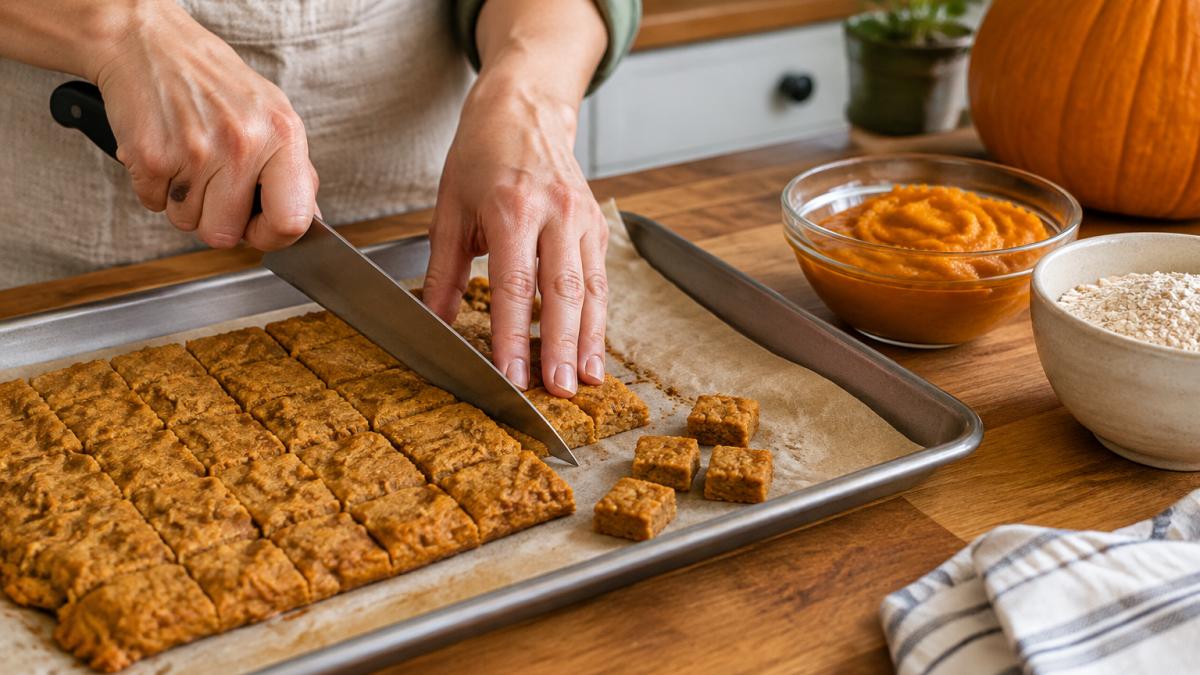
This pumpkin crunchy treats for dogs with allergies recipe uses a short list of ingredients and one bowl. The amounts, temperatures, and doneness cues below let you troubleshoot a batch that comes out soft, crumbly, or sticky.
Ingredients and Amounts
- 1 cup canned pumpkin puree, not pumpkin pie filling
- 2 cups oat flour, plus extra for dusting
- 1 tablespoon coconut oil, melted
Check the pumpkin can. Pie filling has sugar and spices your dog does not need; plain puree is the only kind that belongs in this recipe. Homemade steamed and mashed pumpkin works if drained well, since wet pumpkin makes wet dough.
Oat flour suits many wheat-sensitive dogs. If oats are also a trigger, swap in a flour your vet has cleared, using a single alternative flour rather than a blend so the ingredient list stays short and any reaction is easier to trace.
Baking Temperatures and Doneness Cues
- Heat the oven to 350°F and line a baking sheet with parchment.
- Mix the pumpkin, oat flour, and coconut oil into a firm dough.
- Roll the dough to about 1/4 inch thick on a floured surface.
- Cut into small squares or use a cookie cutter.
- Bake for 25 minutes, then flip each treat.
- Bake another 10 to 15 minutes until the edges firm up and the centers feel dry.
The doneness cue that matters is feel, not color. A properly baked treat is hard at the center and cool to the touch. Soft centers mean moisture, and moisture means mold later.
Troubleshooting the Dough and the Crunch
- Dough too sticky to roll: add oat flour one tablespoon at a time. Pumpkin moisture varies by brand and batch, so the flour amount is a starting point, not a fixed rule.
- Dough crumbly and cracking: add water one teaspoon at a time. Too much water makes a soft treat that never crisps.
- Treats still soft after the full bake: return them to a 300°F oven for 10 to 15 minutes with the door cracked, then cool completely before judging texture. A warm treat always feels softer than a cool one.
Portion and Calorie Grounding
Treats should stay a small share of daily calories. Ask your veterinarian what portion fits your dog's size and diet.
Watch out: if your dog has a history of pancreatitis or is overweight, confirm the fat source and portion with your vet before baking, because coconut oil adds fat that a low-fat plan may not allow.
Homemade Pumpkin Dog Treats Recipes Vet Approved: What Vets Actually Check
No recipe is "vet approved" in a formal sense. Vets check specific things, and you can run the same checklist at home.
- Ingredient safety: no xylitol, no grapes or raisins, no onion or garlic powder, no chocolate
- Allergen match: every ingredient cleared against your dog's known triggers
- Portion fit: treats under 10% of daily calories
A 2024 review in Frontiers in Animal Science on the science of dog treats notes that biscuits remain the most popular treat given to dogs.
One insider point: a treat can be perfectly safe and still upset a sensitive dog's stomach if you switch foods too fast.
3 Ingredient Pumpkin Dog Treats for Sensitive Dogs
Three ingredient pumpkin dog treats cut the risk surface down to almost nothing. Fewer ingredients mean fewer chances of a reaction. This version skips oil and uses banana to bind.
- 1 cup canned pumpkin puree
- 2 cups oat flour
- 1 ripe banana, mashed
Mix, roll, cut, and bake at 350°F for 30 to 40 minutes, flipping once. The banana adds sweetness and moisture, and the oat flour does the structural work.
For a no-bake option, press the dough into small flat patties and chill them for an hour.
A common mistake is adding peanut butter for flavor. Peanut butter is a frequent allergen and a choking risk in thick spoonfuls.
Best Pumpkin Crunchy Treats for Dogs with Allergies: What to Look For
The best pumpkin crunchy treats for dogs with allergies share four traits: a short ingredient list, a named protein source or none at all, no synthetic preservatives, and a clear bake date.
Use this checklist when you compare a bag or a recipe:
- Pumpkin listed as puree, not pie filling
- Five ingredients or fewer
- No wheat, corn, or soy unless your dog has been cleared for them
Crunch matters: a hard, crisp treat takes longer to eat and gives a training reward more staying power.
For a deeper walkthrough of these criteria, read our guide to choosing organic crunchy dog treats. And if you want to spot additives hiding behind clean-sounding labels, our article on synthetic preservatives in dog treats breaks down what to look for.
Dog Mamma's crafts small-batch, USDA Organic Certified, human-grade, plant-based treats made without pesticides or GMOs.
Storage, Freezing, and Portion Guidance
Store cooled treats in an airtight container at room temperature for up to two weeks. Beyond that, move them to the fridge, where they keep for about a month.
For longer storage, freeze baked treats in a sealed bag for up to three months. Thaw only what your dog will eat in a few days. Refreezing softens the crunch.
Portion guidance is simple: keep treats to roughly a tenth of your dog's daily calories. For a small dog, that can mean one or two small treats a day.
Watch out: a treat that smells off, feels soft, or shows any fuzz goes in the trash. Mold on a baked treat is not something to cut around.
Here is how long your baked pumpkin treats keep and how much to feed.
| Item | Value | Note |
|---|---|---|
| Airtight container at room temperature | Up to two weeks | Move to fridge after that |
| Refrigerator | About a month | For storage beyond two weeks |
| Freezer | Up to three months | Thaw only what your dog will eat in a few days |
| Refreezing | Softens the crunch | Avoid if you want crisp treats |
| Daily calories from treats | Roughly a tenth | Keep treats to about 10% of daily calories |
| Small dog portion | One or two small treats a day | Fits the tenth-of-calories guidance |
| Signs to discard | Off smell, soft feel, any fuzz | Mold is not something to cut around |
Choosing Your Allergy-Friendly Pumpkin Treats
The hardest part is not baking. It is knowing which ingredient is actually safe for your dog, and that answer comes from your vet, not a recipe blog.
We built Dog Mamma's for exactly this moment.
Start with one small piece, watch your dog for a day, and go from there. That is how clean eating for pets actually works in practice.
If your dog's allergies have made treat shopping feel like a gamble, you are not alone.
Frequently Asked Questions
Are pumpkin crunchy treats safe for dogs with food allergies?
Pumpkin itself is safe for most dogs, but safety depends on what else is in the treat. Most commercial dog biscuits include flour, eggs, or peanut butter that may trigger a reaction. Read every ingredient, avoid the protein or grain your dog reacts to, and introduce any new pumpkin crunchy treats in a small amount over several days before feeding a full portion.
Can I make 3 ingredient pumpkin dog treats without flour?
Yes. Combine canned pumpkin puree, oat flour, and one egg, then roll, cut, and bake at 350°F until firm and dry. Oats work as a wheat-free binder for many dogs, though a dog with a confirmed oat sensitivity needs a different flour. Keep the dough thin, about 1/4 inch, so the treats bake through and stay crispy rather than chewy in the center.
How can I tell whether a pumpkin treat is truly hypoallergenic?
There is no official hypoallergenic label for dog treats. A plant-based treat made with pumpkin, sweet potato, or apple may suit a protein-sensitive dog, but it is not automatically hypoallergenic, and a dog allergic to pumpkin should avoid it entirely. Check for a short ingredient list, a named protein source, and a statement about shared equipment if cross-contamination matters for your dog.
How many pumpkin treats can I give my dog each day?
Treats should stay a small share of daily calories, so keep portions modest and cut baked treats into small pieces for training. Too much pumpkin at once can loosen stools, so start with one or two small pieces and watch for changes over a few days. Ask your veterinarian for a daily limit if your dog is on a weight-management or prescription diet.
