
The Complete Guide to Clean Label Dog Treat Ingredients
Last Updated: November 12, 2026
Quick Summary
Clean label is not a defined FDA or AAFCO regulatory term, so a clean label dog treat has no legal meaning on the bag and you must inspect the actual ingredient panel. Start with the first three to four ingredients, which are listed by weight, and check that named proteins and whole foods appear ahead of vague terms like meat meal.
- Clean-label ingredients were reported as important to just 10% of dog owners, per Market.us statistics.
- Scan ingredients one through five first, since they carry the most weight on the panel.
- Synthetic preservatives to avoid include BHA, BHT, ethoxyquin, TBHQ, and propylene glycol.
- Xylitol, grapes and raisins, and chocolate are toxic to dogs and should never appear in a treat.
- Dog Mamma's USDA Organic treats, including Peanut Butter Banana and Sweet Potato & Kale, cost $10.49 per 6 oz bag.
Table of Contents
- What Clean Label Really Means for Dog Treats
- How to Read a Clean Label Dog Treat Ingredients List
- Clean Label Dog Treat Ingredients Safe for Everyday Feeding
- Clean Label Dog Treat Ingredients Toxic to Avoid
- What the Clean Label Project Dog Food List Does and Does Not Tell You
- How to Assess Ingredient Quality, Sourcing, and Testing
- Choosing Treats for Dogs with Allergies or Medical Needs
- Building a Clean Label Treat Routine with Dog Mamma's
- Frequently Asked Questions
What Clean Label Really Means for Dog Treats
"Clean label" is not a defined FDA or AAFCO regulatory term, so it has no legal meaning on a dog treat bag. That single fact changes how you should shop. You have to inspect the actual label to judge the claim.
Here's the number that should reframe your expectations. According to Market.us organic pet food statistics, clean-label ingredients were reported as important to just 10% of dog owners. That's a minority of shoppers driving a lot of packaging language.
At Dog Mamma's, we make USDA Organic Certified treats, and we encourage people to read the panel rather than trust the front of the bag. Below, we'll show you exactly how to decode a label, spot synthetic additives, and weigh certification claims without being fooled by either.
How to Read a Clean Label Dog Treat Ingredients List
Start with the ingredient list, not the marketing copy. Ingredients are listed by weight, so the first three or four entries tell you what the treat mostly is. If "organic" appears only near the bottom, the bag is leaning on the word.
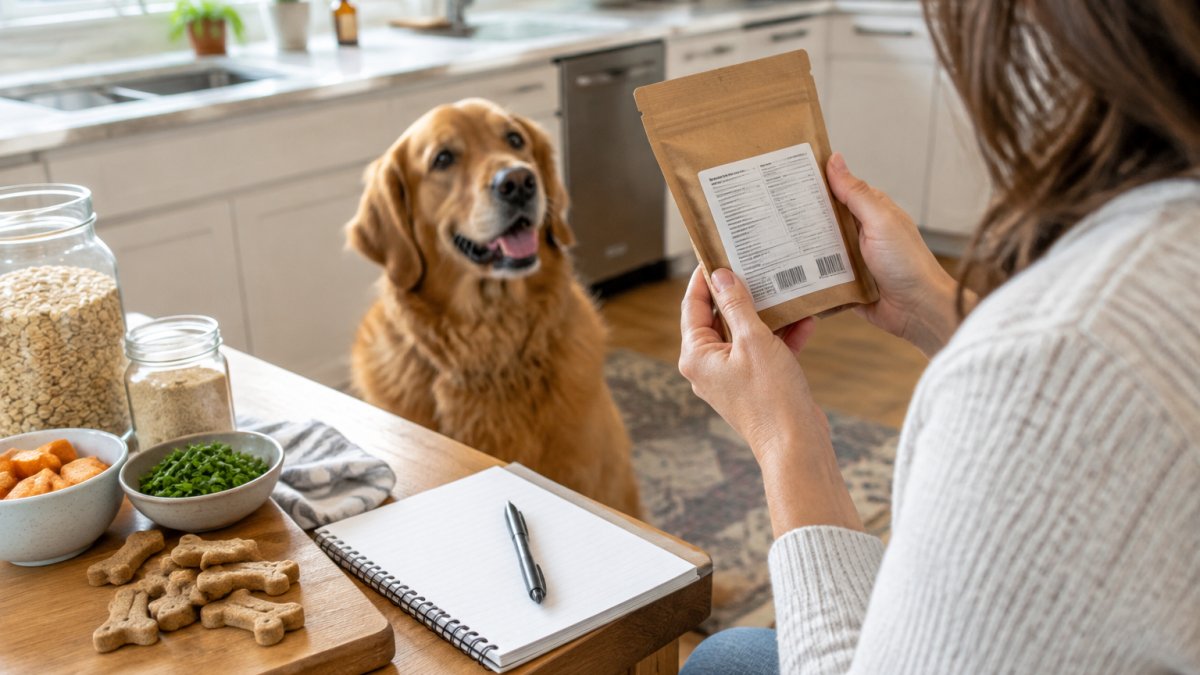
Work through a bag in this order:
- Scan ingredients one through five. These carry the most weight.
- Check whether named proteins appear, such as chicken, salmon, or duck breast, rather than vague "meat meal."
- Look for whole-food ingredients: oats, brown rice, pumpkin, vegetables, fruits, flaxseed.
- Confirm the "organic" claim carries a certification, not just a word.
- Read the guaranteed analysis for protein and fat percentages.
A common mistake is stopping at the front-of-bag claims. The back panel is where the truth lives.
Ingredients That Support Clean Label Dog Treat Ingredients Safe for Sensitive Dogs
For sensitive dogs, simplicity beats variety. Single-ingredient and limited-ingredient recipes reduce the number of things a dog's gut has to process, which makes it easier to identify a trigger if one appears. We see the same pattern in the research: a review in Frontiers in Animal Science on dog treats noted that owners often choose non-processed treats because they believe them preferable.
If your dog has a sensitive stomach and you want specific recommendations, our guide to the best dog treats for sensitive stomachs covers options that won't upset digestion.
Clean Label Dog Treat Ingredients Safe for Everyday Feeding
Everyday treats should be simple enough to feed daily without thinking about it. Whole-food ingredients and recognizable proteins fit that bill.
| Clean-Label Panel | Typical Panel |
|---|---|
| Named protein first (chicken, salmon) | "Meat and bone meal" |
| Oats, brown rice, pumpkin | Corn syrup, wheat middlings |
| No synthetic preservatives | BHA, BHT, ethoxyquin |
| Colors from real ingredients | Red 40, Yellow 5, Blue 2 |
| Certified organic where claimed | "Natural" with no standard |
Single-Ingredient and Limited-Ingredient Claims
A single-ingredient treat means exactly that: one ingredient, nothing else. Limited-ingredient means a short list, usually a protein plus a binder or two. Both are useful shortcuts, but they're marketing descriptions, not regulated categories, so verify against the panel.
Clean Label Dog Treat Ingredients Toxic to Avoid
Some ingredients are genuinely dangerous, and they're worth memorizing. Xylitol, grapes and raisins, and chocolate are toxic to dogs and should never appear in a treat you buy. Beyond those, watch for synthetic preservatives and dyes.
Artificial Preservatives, Colors, and Flavors
The synthetic preservatives to scan for are BHA, BHT, ethoxyquin, TBHQ, and propylene glycol. Artificial colors like Red 40, Yellow 5, and Blue 2 exist to make treats look appealing to humans, not to benefit the dog. "Natural flavor" is a broad category, so it tells you little on its own.
For a deeper walkthrough of the warning signs, read do your dog treats hide synthetic preservatives?
What the Clean Label Project Dog Food List Does and Does Not Tell You
It's also contested. The Pet Food Institute argues the study may mislead pet owners and lacks essential scientific and regulatory context. Separately, Consumer Reports tested 58 dog foods from brands including Blue Buffalo, Hill's Science Diet, and Purina for key nutrients and dangerous contaminants, per Consumer Reports on dog food testing. Use these lists as a starting point for questions, not a verdict on a whole category.
How to Assess Ingredient Quality, Sourcing, and Testing
Quality claims are only as good as the verification behind them. Most clean-label marketing stops at the word "natural," which has no defined regulatory standard for pet treats. The useful questions are more specific, and they fall into three buckets: origin, processing, and testing.
Origin and traceability. Ask where each named ingredient comes from and whether the manufacturer can trace a finished bag back to a specific supplier lot. A company that buys chicken from a single regional supplier can usually answer; one that buys commodity meat meal on the open market often cannot. Look for a named country or region of origin on the package or website, and treat "sourced globally" as a signal that traceability is weak.
Processing. The same ingredient can be handled very differently. Rendered meals are cooked at high heat and can concentrate contaminants; freeze-dried and baked treats use lower temperatures but have their own safety controls. Ask whether the treat is baked, dehydrated, freeze-dried, or extruded, and whether the manufacturer publishes a guaranteed analysis and calorie content per treat. Those numbers tell you more about what your dog is actually eating than any front-of-bag claim.
Testing and certification claims. This is where clean-label language most often outruns the evidence. A certification is only meaningful if you know what it checks, who audits it, and whether it covers the finished treat or just one ingredient. USDA Organic certification, for example, is a defined standard with inspection behind it, unlike "natural." Third-party contaminant testing, for heavy metals, mycotoxins, or pathogens, is valuable, but a single passing test is a snapshot, not a guarantee, and a seal does not tell you the detection limits or how often testing happens. Ask for the testing frequency and the lab's scope.
Watch out: A "third-party tested" badge can mean one lot was tested once, so do not treat a seal as proof that every batch is clean.
For a step-by-step look at what specific certifications verify, see our guide to third-party certification for dog treats.
Choosing Treats for Dogs with Allergies or Medical Needs
Allergy-prone dogs need treats built around a known protein and a short list, but the label alone will not tell you whether a treat is safe for a specific dog. The practical work happens before you buy.
Start with the diagnosis, not the bag. Food allergies and food intolerances look similar but are managed differently, and only a veterinarian can tell them apart. If your dog has been diagnosed with a protein allergy, the treat must avoid that protein entirely, including in "natural flavor," which can be derived from the same animal. Ask the manufacturer directly whether the flavoring source is animal- or plant-based.
Novel proteins and cross-contamination. A novel protein is one your dog has not eaten before, such as venison, duck, or rabbit, which makes it less likely to trigger an existing allergy. But a novel protein is only useful if the manufacturing line is controlled. Many treat makers run several proteins on the same equipment, so ask whether the company publishes a cross-contamination statement or uses dedicated lines. A bag that says "single-ingredient duck" but is made on a line that also runs chicken may not be safe for a chicken-allergic dog.
Plant-based options. If your dog reacts to common animal proteins, a plant-based recipe removes that trigger entirely, but plant-based is not automatically hypoallergenic. Ingredients like peanut, oat, or wheat can also trigger reactions in some dogs, so read the full panel rather than assuming "plant-based" means safe.
Medical conditions. Dogs with kidney disease, pancreatitis, or diabetes need treats evaluated against their overall diet, not just the ingredient list. Calorie content and fat level matter as much as the protein source, and a treat that fits a clean-label definition can still be wrong for a dog on a prescription diet. Bring the guaranteed analysis to your veterinarian rather than deciding from the front of the bag.
Our organic treats for allergic dogs guide walks through picking treats that avoid your dog's specific triggers.
Building a Clean Label Treat Routine with Dog Mamma's
We craft small-batch, USDA Organic Certified, plant-based treats with human-grade ingredients, free from pesticides and GMOs. Our recipes use recognizable ingredients like organic peanut butter, bananas, blueberries, sweet potato, and kale.
You can browse our USDA certified organic dog treats, including our Organic Peanut Butter Banana and Organic Sweet Potato & Kale recipes at $10.49 per 6 oz bag.
Reading labels takes a few extra seconds per bag, but it's the only way to know what your dog is actually eating. Dog Mamma's makes that easy with USDA Organic Certified, plant-based treats in small, handcrafted batches, free from pesticides and GMOs. Browse our organic recipes and start a routine you can feel good about.
Frequently Asked Questions
What ingredients should I avoid in dog treats?
Watch for artificial preservatives such as BHA, BHT, ethoxyquin, TBHQ, and propylene glycol, plus artificial colors like Red 40, Yellow 5, and Blue 2. Xylitol is toxic to dogs, and grapes, raisins, and chocolate should never appear. The term natural flavor is loosely defined, so check what else is on the list. A clean label dog treat should list recognizable ingredients, not a long chain of synthetic additives.
How trustworthy is the Clean Label Project?
Treat its Clean Label Project dog food list as one data point, not a certification of safety, and read the actual ingredient label alongside it.
What makes a dog treat ingredient label clean?
A clean label dog treat typically lists whole-food ingredients you recognize, such as chicken, salmon, pumpkin, oats, or peanut butter, with no artificial preservatives, colors, or flavors. Because clean label is not a defined FDA or AAFCO term, the label itself is the proof. Look for short lists, named animal proteins, and certifications like USDA Organic that carry real third-party verification.
Are single-ingredient dog treats always healthier?
Not automatically. Single-ingredient treats like duck breast, venison, or lamb lung simplify the label, which helps dogs with allergies. But a single ingredient can still carry contaminants, and it may not suit every dog's nutrition needs. The claim describes the list, not the quality. Check sourcing and testing claims, and confirm the treat fits your dog's overall diet and calorie budget.
How can I tell whether clean label dog treat ingredients are safe?
Start with the ingredient list and remove anything artificial, then check for certifications such as USDA Organic, which requires third-party verification. Look for named proteins and whole foods rather than generic terms. Ask the brand about sourcing and testing. Marketing is common, so verify claims rather than trusting the front of the bag.
How do I read a dog treat ingredient list?
Ingredients are listed by weight, so the first few names matter most. Look for a named animal protein or whole food first, then scan for artificial preservatives, colors, and vague terms like meat meal or natural flavor. Compare the list length against the front-of-pack claims. If the bag says clean but the panel lists BHA or propylene glycol, the label tells the real story.
