
Organic Treats for Allergic Dogs: 2026 Guide
Table of Contents
- Understanding Food Allergies vs. Environmental Allergies in Dogs
- What USDA Organic Certification Actually Means for Dog Treats
- Hypoallergenic Dog Treats: What Makes Them Safe
- Single Ingredient Dog Treats for Allergies
- Novel Protein Dog Treats for Food Sensitivities
- Dog Treats for Sensitive Stomachs: Plant-Based Options
- Top Organic Treats for Allergic Dogs
- How to Introduce New Treats and Monitor for Reactions
- Frequently Asked Questions
Last Updated: October 19, 2026
Understanding Food Allergies vs. Environmental Allergies in Dogs
Food and environmental allergies in dogs produce similar symptoms but need different management. Many owners assume itching means a food problem when pollen, dust mites, or mold are responsible.
Food allergies occur when the immune system reacts to a specific protein or ingredient; environmental allergies happen through inhaling or contacting airborne allergens.
Signs of Food Allergies
Food allergies show up as consistent digestive and skin symptoms: chronic ear infections, paw licking, face rubbing, vomiting, diarrhea, gas, rashes, hives, or hot spots, usually within hours or days of eating the trigger.
Some dogs also become restless or refuse meals, or develop a dull coat or patchy hair loss. If your dog consistently reacts after eating certain treats or meals, food allergies are likely the culprit.
When to Consult Your Veterinarian
Your veterinarian can distinguish food allergies from environmental sensitivities through an elimination diet: remove suspected ingredients for 8-12 weeks, then reintroduce them one at a time to identify triggers.
Blood and intradermal skin tests exist, though their accuracy for dogs remains debated. Once you identify triggers, selecting organic treats for allergic dogs becomes straightforward: choose products without those specific ingredients.
What USDA Organic Certification Actually Means for Dog Treats
Most roundups treat "organic" as a synonym for "natural" or "hypoallergenic." It is neither. USDA Organic is a specific federal certification with defined production and handling standards, and knowing what it does and does not guarantee separates a genuinely cleaner product from a premium label.
The four organic label categories
Products sold as organic in the United States fall into four labeling tiers under the USDA National Organic Program:
- "100% Organic", all ingredients must be certified organic (with limited exceptions for salt and water).
- "Organic", at least 95% of ingredients by weight must be certified organic.
- "Made with Organic [ingredients]", at least 70% of ingredients must be certified organic; the remaining 30% cannot include prohibited practices such as genetic engineering or sewage sludge.
For a dog treat, "made with organic" is a weaker claim than "organic" or "100% organic." Read which tier the product actually qualifies for, not just whether the word appears on the bag.
What certification does guarantee
USDA Organic certification covers how ingredients are produced and handled: no prohibited synthetic pesticides or fertilizers, no genetic engineering, no sewage sludge, no irradiation. Certified operations are inspected annually by a USDA-accredited agent, whose name typically appears on the package.
What certification does not guarantee
USDA Organic does not mean:
- Allergen-free. A certified organic treat can contain organic peanut, organic wheat, organic dairy, or organic chicken, any of which can trigger an allergic dog. Organic and hypoallergenic are separate attributes, and you need both.
- Free of cross-contact. Organic standards govern production inputs and handling, not allergen cross-contact controls. A certified facility can still run organic wheat products on shared equipment.
- Hypoallergenic by definition. There is no organic standard for allergen safety.
How to verify an organic claim
Look for the USDA Organic seal and the certifying agent's name on the package. If the seal is absent but the word organic appears, check which tier the product claims. When a claim is unclear, ask for the certifier and the organic certificate.

Cross-contact and manufacturing controls
For a dog with a severe allergy, the facility matters as much as the ingredient list. Ask whether the product is made on dedicated or shared equipment, what allergen-control procedures run between batches, and what other products share the facility. "Small-batch" is not a regulated term, so ask directly.
Hypoallergenic Dog Treats: What Makes Them Safe
"Hypoallergenic" is a marketing term, not a regulated claim, no federal standard defines it, so any brand can print it on a bag.
A treat is more likely safe when it meets three tests: a single or very short ingredient list, avoidance of proteins your dog has already reacted to, and full disclosure of production and cross-contact.
Why protein is usually the trigger
Most diagnosed canine food allergies involve a protein source, most commonly beef, dairy, chicken, and wheat, per veterinary dermatology guidance. That means "grain-free" is not "allergen-free": a grain-free treat built on chicken or beef can still trigger a sensitive dog. Judge protein source first, carbohydrate and binder sources second, marketing claims last.
The label-reading checklist
Use the same repeatable check every time you evaluate a new bag:
- Identify every protein. Look for named sources (chicken, beef, lamb, salmon, egg, dairy) and for proteins hiding under generic terms such as "meat meal," "animal by-products," "poultry fat," or "natural flavors." If the protein is not named, assume it could be one your dog reacts to.
- Check the binder and filler. Wheat, corn, soy, and some legumes show up as binders even in treats positioned as limited-ingredient.
- Watch for flavoring and fat. "Chicken fat" and "poultry fat" are common in treats that otherwise look plant-based.
Single-ingredient and limited-ingredient treats
Single-ingredient treats are the cleanest diagnostic tool because they isolate one variable: if your dog reacts, you know what caused it. Limited-ingredient diets, which cap ingredients and use one novel protein and one carbohydrate, are the standard veterinary approach for elimination trials.
Novel proteins and plant-based options
Novel proteins such as duck, rabbit, venison, wild boar, and goat work because a dog's immune system has not been sensitized to them. Plant-based treats built on sweet potato, pumpkin, apple, or kale can suit protein-sensitive dogs but are not automatically hypoallergenic, a dog can react to a plant ingredient too, so the same label check applies.

What to ask before you buy
Ask any brand three questions: What is the complete protein source? Is it made on shared equipment with wheat, dairy, chicken, or beef? Can you provide the full ingredient statement and any formulation changes?
Single Ingredient Dog Treats for Allergies
Single ingredient dog treats for allergies are the gold standard for identifying triggers. If your dog reacts to a ten-ingredient treat, you won't know which one caused it; a single-ingredient treat isolates the variable.
Common options include freeze-dried chicken, beef liver, or sweet potato; for dogs avoiding animal proteins, single-ingredient apple, carrot, or pumpkin work well.
Dog Mamma's Organic Sweet Potato & Kale Recipe - USDA Organic Certified Dog →
Novel Protein Dog Treats for Food Sensitivities
Novel protein dog treats for food sensitivities use proteins your dog has never encountered. If your dog reacted to chicken, beef, and lamb, try duck, rabbit, wild boar, or goat.
Novel protein treats work best within an elimination diet, introducing one new protein at a time and monitoring for reactions.
Dog Treats for Sensitive Stomachs: Plant-Based Options
Dog treats for sensitive stomachs often succeed with plant-based formulas because they're easier to digest than protein-heavy treats. Sweet potato, pumpkin, and kale provide fiber and nutrients without the digestive stress some proteins cause.
Many sensitive-stomach dogs thrive on limited-ingredient plant-based treats that avoid grains, legumes, and common proteins.
Reading Labels and Identifying Hidden Allergens
Reading labels carefully is essential when selecting organic treats for allergic dogs. Look for ingredient lists where you recognize every item. Vague terms like "meat meal," "animal by-products," or "natural flavors" hide specific ingredients that might trigger allergies.
Check for hidden allergens under different names: chicken fat may be listed as "poultry fat," wheat gluten hides in treats labeled "grain-free," and peanut oil sometimes appears as "vegetable oil." Cross-reference ingredient lists against your dog's known triggers, and when in doubt, contact the manufacturer directly.
Top Organic Treats for Allergic Dogs
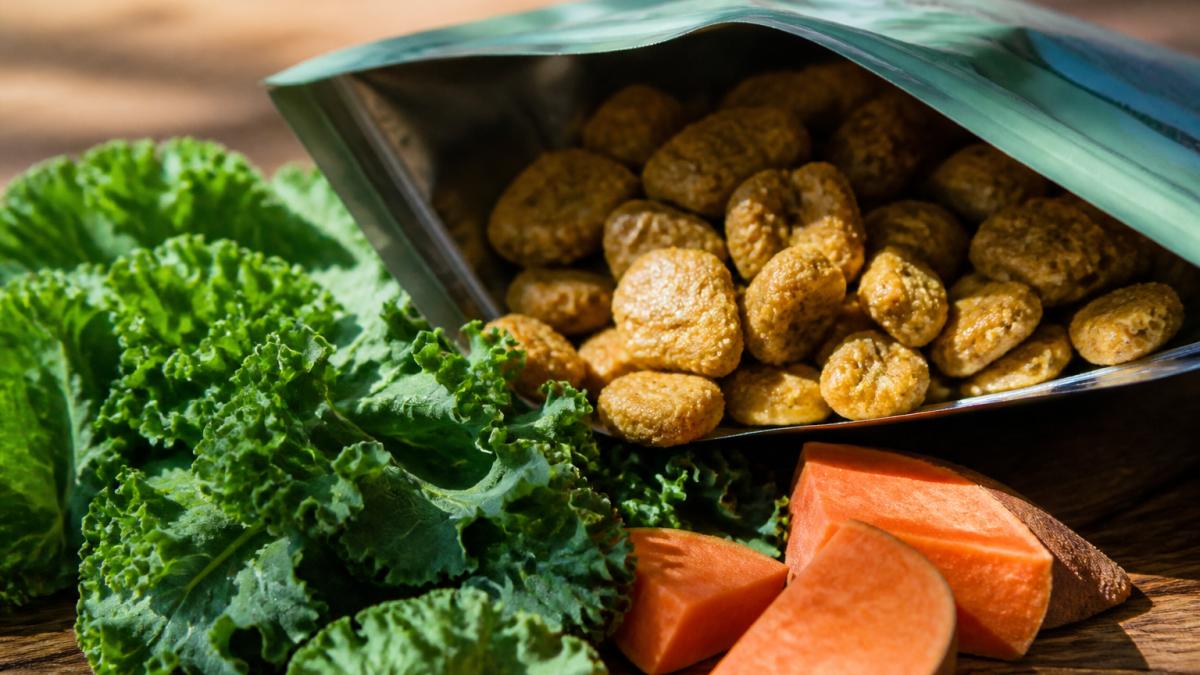
Dog Mamma's Organic Sweet Potato & Kale Recipe
Dog Mamma's Organic Sweet Potato & Kale Recipe delivers nutrient-dense bites packed with superfoods your allergic dog can safely enjoy.
At $10.49 per 6 oz bag, this treat offers excellent value for USDA Organic Certified, human-grade ingredients. The recipe is plant-based, making it suitable for dogs avoiding chicken or beef.
Dog Mamma's Organic Apple Cranberry Recipe
The Organic Apple Cranberry Recipe combines tart cranberries with sweet apples and organic cinnamon. This recipe is plant-based, which can work well for dogs with chicken or beef sensitivities.
At $10.49 per 6 oz bag, this treat fits the same price point as other Dog Mamma's options.
Dog Mamma's Organic Berry Banana Coconut Recipe
Loaded with visible organic blueberries, this recipe combines antioxidant-rich berries with digestible banana and crispy coconut flakes.
At $10.49 per 6 oz bag, the Organic Berry Banana Coconut Recipe delivers premium ingredients at accessible pricing and works well for dogs avoiding all animal proteins.
Dog Mamma's Organic Peanut Butter Banana Recipe
For dogs without peanut allergies, the Organic Peanut Butter Banana Recipe combines creamy organic peanut butter with sweet bananas. Peanut butter provides protein and healthy fats, while bananas add natural sweetness.
Priced at $10.49 per 6 oz bag, this option works for dogs with chicken, beef, or grain sensitivities who can tolerate plant-based proteins.
| Dog Mamma's Recipe | Key Ingredients | Best For | Price |
|---|---|---|---|
| Sweet Potato & Kale | Organic sweet potato, kale | Sensitive stomachs, training | $10.49 |
| Apple Cranberry | Organic apple, cranberry, cinnamon | Urinary health support | $10.49 |
| Berry Banana Coconut | Organic blueberries, banana, coconut | Antioxidant-rich nutrition | $10.49 |
| Peanut Butter Banana | Organic peanut butter, banana | $10.49 |
How to Introduce New Treats and Monitor for Reactions
Introducing new treats slowly prevents digestive upset and helps you identify allergic reactions.
This measured approach works whether you're introducing organic treats for allergic dogs or any new food.
Watch for delayed reactions 12-48 hours after eating the new treat: some dogs show immediate itching or vomiting, while others develop loose stools or ear infections days later.
Choosing the right treats for your allergic dog requires patience and attention to ingredients, but the payoff is worth it. Dog Mamma's Organic treats are USDA Organic Certified, human-grade, and crafted in small batches to minimize cross-contamination risks.

Frequently Asked Questions
How do I know if my dog has a food allergy versus an environmental allergy?
Food allergies typically cause itching, ear infections, and digestive issues that appear year-round or worsen after eating. Environmental allergies are seasonal or triggered by pollen and dust. A veterinarian can perform elimination diets or allergy testing to distinguish between the two. During an elimination diet, you feed a single-ingredient or limited-ingredient diet for 8-12 weeks, then reintroduce foods one at a time to identify triggers. This process helps pinpoint whether organic treats for allergic dogs will actually address your dog's symptoms.
What does USDA Organic Certification actually guarantee for dog treats?
USDA Organic Certification means ingredients are grown without synthetic pesticides, fertilizers, or GMOs. For dog treats, it verifies that organic ingredients meet federal standards and have been inspected by third-party certifiers. However, certification does not guarantee cross-contamination controls during manufacturing or rule out other allergens like peanuts or dairy. Always review the full ingredient list and ask manufacturers about their facility practices to ensure the treats are safe for your dog's specific allergies.
Are single-ingredient treats really better for dogs with food allergies?
Single-ingredient treats simplify allergy identification because each treat contains only one ingredient, making it easier to spot triggers during elimination diets. They reduce the risk of hidden allergens from multiple sources. However, they may be less palatable to some dogs than multi-ingredient options. Dog Mamma's plant-based treats, while multi-ingredient, use limited, clearly labeled organic ingredients and are free from chicken or beef, offering a balanced approach for sensitive dogs.
Can I use organic treats as high-value rewards during agility training?
Yes, organic treats can work for training rewards if your dog finds them motivating. Crunchy treats like Dog Mamma's Organic Sweet Potato & Kale or Apple Cranberry recipes are portable during active training sessions. Start with small pieces to control calorie intake. Some dogs are motivated by plant-based treats, while others prefer protein-based rewards; observe your dog's enthusiasm during training to determine if organic plant-based options suit your training goals.
How do I introduce new organic treats to a dog with food sensitivities?
Introduce new treats slowly over 7-10 days, starting with a small piece every few days while monitoring for itching, vomiting, diarrhea, or other reactions. Keep a food journal to track any symptoms. If your dog tolerates the treat well, gradually increase the portion. Avoid introducing multiple new treats simultaneously, as this makes it harder to identify what caused any adverse reaction. This gradual approach helps you confidently add organic treats to your dog's diet while protecting against unexpected digestive upset.