
How to Make Organic Peanut Butter Banana Dog Treats
Last Updated: November 4, 2026
Quick Summary
Organic peanut butter banana treats for dogs with allergies use just five ingredients, led by xylitol-free peanut butter and a ripe banana, and bake in about 30 minutes at 350°F. Always read the peanut butter label first, since xylitol is toxic to dogs and hides in sugar-free spreads. Match any flour or binder swaps to your dog's specific allergen.
- Bake the biscuits 18-22 minutes until firm and dry, then cool completely before serving.
- Choose peanut butter whose ingredient list reads only peanuts and optionally salt.
- Store baked biscuits airtight at room temperature up to two weeks or freeze three months.
- Keep dedicated bowls, rolling pins, and baking sheets for dog treats in a shared kitchen.
- Dog Mamma's ready-made 6 oz bag of the organic recipe costs $10.49.
Table of Contents
- Why Organic Peanut Butter Banana Treats Work for Allergic Dogs
- Ingredients and Supplies for Homemade Dog Treats
- Step-by-Step: Baking Crunchy Peanut Butter Banana Biscuits
- Why Xylitol-Free Peanut Butter for Dogs Is Non-Negotiable
- Hypoallergenic Dog Treats for Sensitive Stomachs: Substitutions That Work
- How to Read Dog Treat Labels for Allergens
- Managing Canine Food Allergies With Diet: A Practical Framework
- Storing Your Treats and Choosing a Trusted Organic Brand
- Frequently Asked Questions
Why Organic Peanut Butter Banana Treats Work for Allergic Dogs
Organic peanut butter banana treats for dogs with allergies work because they combine two gentle, single-ingredient foods into a reward you control completely. According to PetMD's guidance on peanut butter for dogs, peanut butter is a popular treat that must be checked for xylitol, a sweetener toxic to dogs. Bananas add natural sweetness and potassium without the wheat, corn, or soy that trigger most reactions.
The peanut butter banana treats appeal to dogs without peanut allergies and give allergic dogs a reward that sidesteps the usual culprits. Wheat, beef, corn, soy, and chicken top the list of allergens to avoid in sensitive dogs, per Make Dogs Great allergen avoidance guidelines.
That simplicity is the whole point. Below, we cover the recipe, the xylitol rule, substitutions, label reading, and how to store what you bake.
Ingredients and Supplies for Homemade Dog Treats
You need five ingredients and basic kitchen equipment. Here is the full list:
Ingredients:
- 1 cup oat flour or gluten-free flour blend
- 1/2 cup xylitol-free peanut butter
- 1 ripe banana, mashed
- 1 egg
- 1/4 cup water, as needed
Supplies:
- Food processor or mixing bowl
- Baking sheet lined with parchment paper
- Rolling pin and cookie cutter
The Xylitol-Free Peanut Butter Rule
Read the peanut butter label before anything else. Xylitol appears in "sugar-free" and "low-sugar" spreads, and even small amounts can harm a dog. Choose a brand whose ingredient list reads "peanuts" and salt, nothing more. If the label mentions birch sugar, xylitol, or an unlabeled sweetener, put it back.
Step-by-Step: Baking Crunchy Peanut Butter Banana Biscuits
Total time runs about 30 minutes, matching the benchmark for homemade peanut butter banana treats from Pook's Pantry. Preheat the oven to 350°F and line a baking sheet with parchment paper.
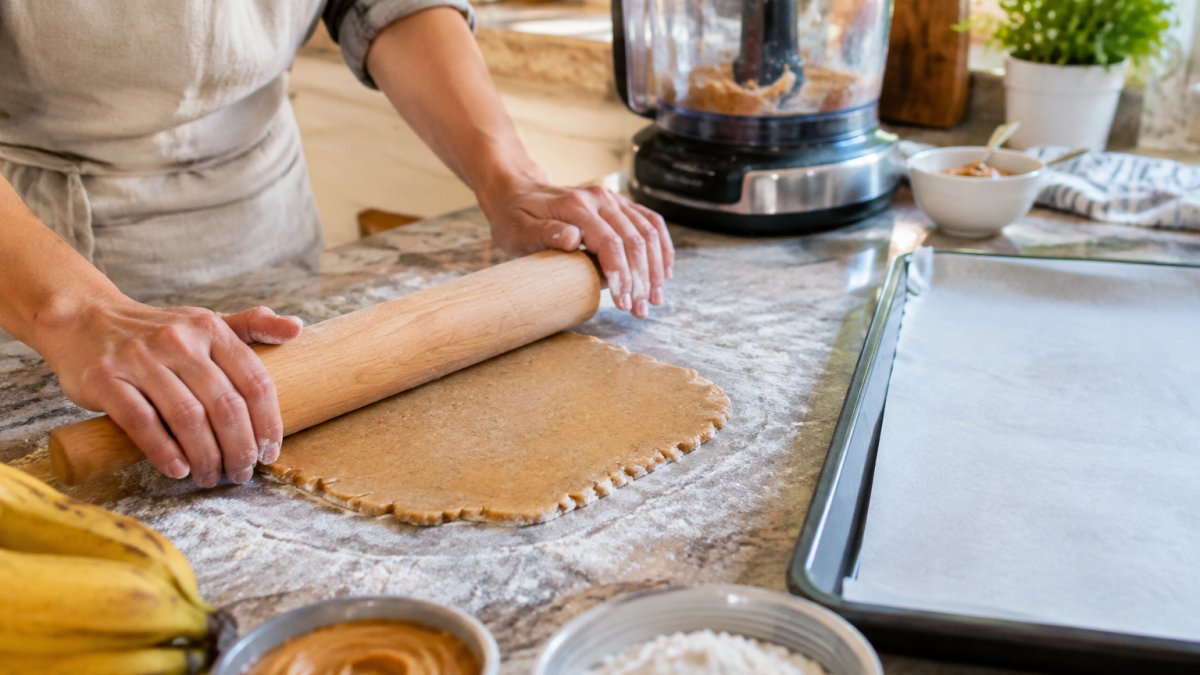
- Pulse the banana and peanut butter in a food processor until smooth.
- Add the egg and blend.
- Mix in the flour until a firm dough forms, adding water a spoonful at a time.
- Roll to 1/4-inch thickness and cut into shapes.
- Bake 18-22 minutes until firm and dry.
- Cool completely before serving.
Expected result: Biscuits that snap cleanly and keep their shape. Watch out: underbaked centers turn moldy fast, so return soft batches to the oven for five more minutes.
No-Bake and Soft-and-Chewy Variations
Skip the oven by chilling spooned dough balls for an hour; these soft and chewy bites suit senior dogs and small mouths. For a no-bake option with more structure, roll the mixture in extra oat flour and refrigerate. Prefer the finished product? Peanut Butter Banana Small Treats Are Coming Soon covers our ready-made version.
Why Xylitol-Free Peanut Butter for Dogs Is Non-Negotiable
Xylitol-free peanut butter for dogs is an important safety requirement. Xylitol is a common ingredient that can be harmful to dogs.
How Xylitol Harms a Dog
Xylitol is a sugar alcohol used as a low-calorie sweetener in sugar-free gum, mints, baked goods, toothpaste, and some nut butters. In people it barely moves blood sugar. In dogs, xylitol can be toxic, and any suspected exposure should be treated as an emergency.
Reading the Label Like a Safety Check
Xylitol hides under several names. Scan the ingredient list for all of these before the jar goes in your cart:
- Xylitol
- Birch sugar
- Birch bark extract
The safest peanut butter has one or two ingredients: peanuts, and optionally salt. Avoid anything labeled "sugar-free," "low-sugar," "reduced-sugar," or "keto," because those are the categories where xylitol most often appears.
Watch out: a jar that says "no sugar added" is not automatically xylitol-free, read the full ingredient list, not the front-of-pack claim.
If You Suspect Your Dog Ate Xylitol
Do not wait for symptoms. Call your veterinarian or a pet poison hotline immediately, and have the product label and an estimate of how much the dog ate in front of you. Do not induce vomiting unless a veterinarian tells you to. Prompt treatment is important.
Peanut Allergies and Other Risks
Peanut butter itself is not universally safe. Some dogs have genuine peanut allergies, and commercial spreads vary widely in added sugar, palm oil, and salt. Our rule is simple: buy peanut butter with one or two ingredients, store it away from the sugar-free products so a household member does not grab the wrong jar, and introduce any new food in small amounts. Because ingredient lists can hide added sugar, salt, or unsafe sweeteners, reading treat labels carefully is a useful habit whenever you choose a snack for your dog.
Dog Mamma's Organic Peanut Butter Banana Recipe - USDA Organic Certified Dog →
Hypoallergenic Dog Treats for Sensitive Stomachs: Substitutions That Work
Hypoallergenic dog treats for sensitive stomachs swap problem ingredients without losing the reward. Most recipes stop at "use a different flour." For a dog with a confirmed allergy, the swap has to be matched to the specific trigger, and the kitchen has to be clean enough that a trace of the wrong ingredient does not undo weeks of elimination dieting.
The Substitution Matrix
Match the swap to the ingredient your dog actually reacts to. Each row keeps the recipe's structure, one binder, one fat, one flour, so the dough still rolls and bakes the same way.
| If your dog reacts to | Replace | With | Watch for |
|---|---|---|---|
| Peanuts | 1/2 cup peanut butter | 1/2 cup sunflower seed butter or 1/2 cup mashed sweet potato | Sunflower is a separate allergen, introduce slowly |
| Wheat or gluten | 1 cup oat flour | 1 cup rice flour or 1 cup chickpea flour | Chickpea can cause gas in sensitive dogs |
| Chicken or egg | 1 egg | 2 extra tbsp mashed banana or 1 tbsp ground flax plus 3 tbsp water | Flax needs 5 minutes to gel before mixing |
| Dairy | Any milk or cheese add-in | Unsweetened applesauce or plain pumpkin puree | Pumpkin is high in fiber, start with small amounts |
| Beef or poultry | Any meat-based add-in | Keep the recipe plant-based as written | Check treat labels for "meat meal" |
| Corn or soy | Any flour blend | Single-ingredient flour you have verified | Blends often include corn or soy as fillers |
For dogs with confirmed grain issues, choose grain-free flour blends and check every package for cross-contamination warnings. A flour milled in a facility that also handles wheat is not safe for a celiac-sensitive dog, even if the flour itself is rice.
Cross-Contamination Protocol for a Shared Kitchen
If your kitchen also handles wheat, soy, dairy, or other common allergens for the humans in the house, traces can end up in your dog's treats through flour dust, shared utensils, or a cutting board. Consider keeping a dedicated set of tools for dog treats. Here is one approach:
- Dedicate tools. Keep a separate mixing bowl, rolling pin, cookie cutter, and baking sheet that only touch dog treats. Store them apart from the family tools.
- Clean the counter first. Wipe down the work surface with soap and water, not just a dry cloth, before the dog dough touches it.
- Mix dry ingredients away from the family's flour. Flour dust travels. Open the dog's flour on a clean surface, not next to a bowl of wheat flour.
- Wash hands between tasks. If you handle a family sandwich and then roll dog dough, wash first.
- Bake on parchment. A parchment-lined sheet keeps the dough off a surface that may have held other foods.
- Label the container. Write the bake date and the exact ingredients on the lid so a future batch is not confused with a previous one.
Check flour packaging for "may contain" warnings.
When to Stop Substituting and Call Your Vet
Substitutions are for maintenance, not diagnosis. If your dog is actively itching, has loose stool, or has recurring ear infections, do not experiment with swaps on your own. A limited-ingredient elimination diet guided by a veterinarian is the reliable way to identify the trigger, and treats count as food in that process. Our best dog treats for sensitive stomachs guide covers the full substitution map, and our organic treats for allergic dogs guide goes deeper on choosing brands.
How to Read Dog Treat Labels for Allergens
Start with the species statement. Pet food products must explicitly specify the target species, such as "dog treats," on packaging to meet regulatory requirements, according to the Department of Agriculture and Markets.
Organic claims deserve scrutiny. Organic dog treat ingredients must meet federal standards and undergo third-party inspection, per Dog Mamma's regulatory overview, which means a real certification should appear on the bag. For a full walkthrough, read our third-party certification guide.
| Label Element | What to Check | Red Flag |
|---|---|---|
| Species statement | Says "dog treats" | Missing entirely |
| Ingredient list | Known allergens absent | Vague "meat meal" |
| Sweeteners | No xylitol or birch sugar | "Sugar-free" claim |
| Certification | USDA Organic seal | "Natural" only |
Managing Canine Food Allergies With Diet: A Practical Framework
Managing canine food allergies with diet follows an elimination-then-challenge sequence. Feed a limited-ingredient diet for eight to twelve weeks, note every symptom, then reintroduce one ingredient at a time to isolate the trigger. Treats count as food, so a "safe" kibble plus a trigger-laden biscuit still fails.
Use this framework:
- Pick a protein and carb your dog has never eaten
- Audit every treat, chew, and table scrap
- Log itching, stool quality, and ear redness weekly
Homemade batches give you total control here, which is why DIY recipes have spread among owners of allergic dogs, a trend noted by Parkwood Animal Hospital.
Storing Your Treats and Choosing a Trusted Organic Brand
Store baked biscuits in an airtight container at room temperature for up to two weeks, or freeze them for three months. Soft and no-bake versions belong in the refrigerator. Label the container with the bake date; preservative-free treats do not forgive forgetfulness.
When buying instead of baking, look for USDA Organic Certified, human-grade, plant-based products with a named certification. Dog Mamma's bakes the Organic Peanut Butter Banana Recipe in small batches with creamy organic peanut butter and sweet organic bananas, in a 6 oz bag for $10.49.

Frequently Asked Questions
Is peanut butter and banana a good treat for dogs with allergies?
It can be, but only if your dog is not allergic to peanuts and the peanut butter is xylitol-free. Peanut butter is a common trigger for some dogs, and xylitol is toxic to dogs, so check the label every time. Bananas are generally well tolerated and add potassium and fiber. For dogs with confirmed sensitivities, start with a small piece and watch for digestive upset over 24 hours before making these peanut butter banana treats a regular reward.
Which peanut butter brands are xylitol-free for dogs?
There is no single brand list that stays accurate, because formulas change. Instead, read the ingredient panel and confirm xylitol does not appear under any name. Choose peanut butter with one or two ingredients, peanuts and maybe salt, and avoid sugar-free or low-sugar versions, which are the most likely to contain xylitol. When in doubt, make your own by grinding plain roasted peanuts in a food processor until smooth, then use that in your xylitol-free peanut butter for dogs.
How do I identify common food allergens in dog treats?
Start with the ingredient list, which must be specific rather than vague. Look for wheat, beef, corn, soy, and chicken, the most common allergens in sensitive dogs, and note any unnamed animal fat or by-product. Check for a species statement such as dog treats, which federal labeling rules require, and look for a USDA Organic seal if you want third-party verification of ingredients. If your dog has a diagnosed allergy, compare every new treat against the elimination diet your vet built.
Are USDA Organic certified treats safer for dogs with sensitivities?
The seal is not an allergy guarantee, but it does mean ingredients met federal organic standards and were subject to third-party inspection, which reduces exposure to pesticides and non-organic fillers. For a dog with sensitivities, that narrower ingredient pool can mean fewer surprise reactions. Pair the seal with a short ingredient list and a protein your dog already tolerates. Small-batch organic treats, like a crunchy peanut butter banana recipe baked with organic ingredients, give you both transparency and a limited ingredient profile.
Your dog's next reaction is either a data point or a preventable mistake, and the difference is the ingredient list you choose. If you want the recipe without the measuring cups, Dog Mamma's handcrafts USDA Organic Certified, human-grade, plant-based treats in small batches, free from pesticides and GMOs. Get started with Dog Mamma's and give your allergic dog a reward you can trace to the source.
