
Which Dog Treats Actually Work for Agility Training?
Quick Summary
The best dog treats for agility training are small, soft, easy-to-swallow pieces about the size of a pencil eraser, because they can be delivered between obstacles without stopping the dog. Save strong-smelling, high-value rewards for distractions and hard parts of a run, and count treat calories against the daily food portion.
- Choose pea-sized or smaller soft pieces, roughly the size of a pencil eraser.
- Save the strongest-smelling rewards for contacts, weave entries, and distraction-heavy recalls.
- Portion treats before leaving home and subtract them from the day's regular food.
- Check whether a treat is recyclable, offered in refill sizes, and matched to your use rate.
- Treat organic certification as one verified claim, then check sourcing and packaging separately.
Table of Contents
- Which Dog Treats Actually Work for Agility Training?
- What Makes a Treat Work During Agility Training
- High-Value Dog Training Treats Versus Everyday Snacks
- Small Dog Training Treats for Frequent Rewards
- Sustainable Ingredients and How to Judge Them
- Organic Dog Treats That Fit an Agility Routine
- Choosing Treats for a Dog With a Sensitive Stomach
- Stocking Your Agility Bag: Your Next Step
- Frequently Asked Questions
Which Dog Treats Actually Work for Agility Training?
Last Updated: October 28, 2026
Choosing dog treats for agility is harder than it looks. A reward has to be small enough to eat in a second, tasty enough to beat the distractions on an agility course, and light enough that a dog doesn't pile on calories across a long training day. Dog Mamma's builds small-batch, USDA Organic Certified treats with human-grade, plant-based ingredients. The global natural dog treat market is projected to reach USD 4.8 billion in 2026, according to Future Market Insights natural dog treat market report, which tells you how many owners are now reading labels. Below, we'll show you what matters most during fast-paced training, and how to judge a treat's sustainability claims for yourself.
What Makes a Treat Work During Agility Training
A treat that works on the course has to do five things at once: get the dog's attention, arrive in a size the handler can deliver in a fraction of a second, be swallowed without stopping the dog, leave no mess on equipment or hands, and stay light enough that dozens of rewards don't blow the dog's daily calorie budget. Most owners discover that the treat that works at the kitchen table fails in a field full of smells and other dogs, not because the flavor is wrong, but because the delivery mechanics are wrong.
Delivery speed is the real constraint
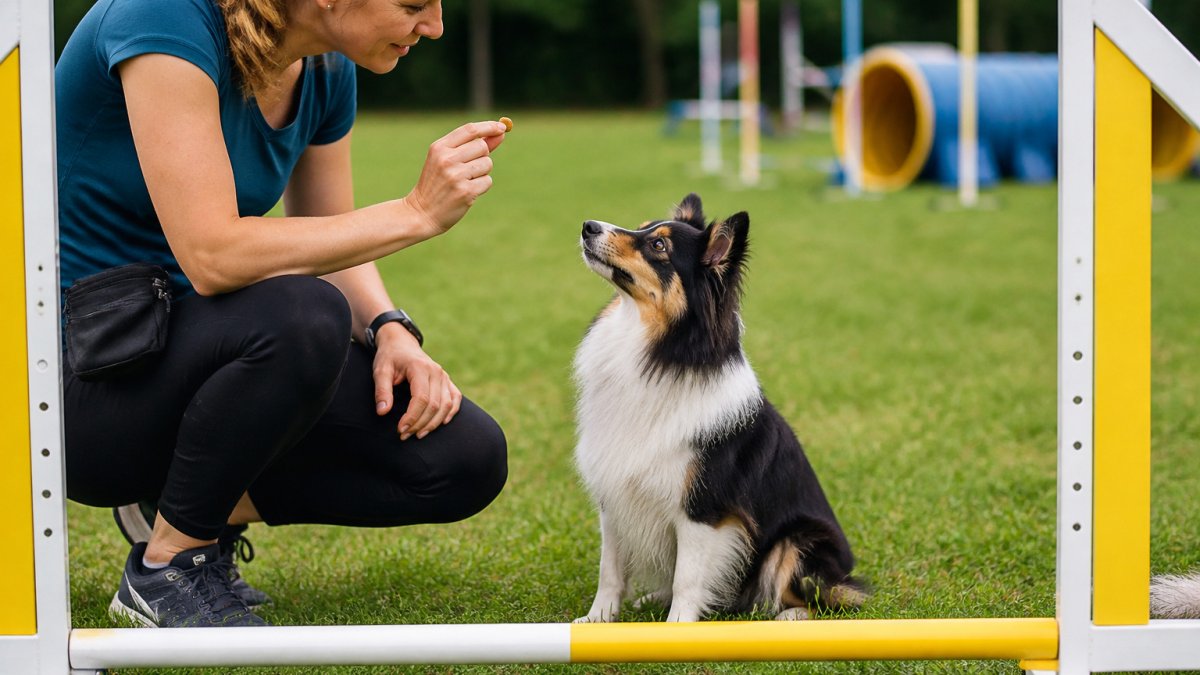
Reward delivery between obstacles has to be near-instant. A soft, easy-to-break piece usually beats a hard biscuit because the handler can pinch off a piece one-handed from a training pouch and get it to the dog's mouth before the next obstacle. Hard biscuits force the dog to stop and crunch, which interrupts the run and teaches the dog that rewards come with a pause. Most practitioners find that pea-sized or smaller soft pieces, roughly the size of a pencil eraser, are the sweet spot for repetition-heavy sessions.
Easy swallowing at speed
A treat the dog has to chew is a treat that slows the run. Soft, moist textures swallow quickly and let the dog re-engage with the course. Crunchy treats still have a place, they last longer in a pouch and suit calm home sessions, but on course, texture is a speed decision, not just a taste decision.
Low mess around equipment and handlers
Agility venues care about clean contacts and safe footing. Crumbly treats scatter grit on the course and leave residue on hands that then touch leads, collars, and contact equipment. Soft treats that hold together when pinched are the practical choice for indoor classes and trials where cleanup matters. Carry a small sealable bag for scraps and wipe hands before handling equipment.
Focus around distractions
A dog working near tunnels, teeters, and other teams has to choose the handler over the environment. That is a value question: the reward has to smell strong enough to compete with the venue. Save the strongest-smelling, highest-value rewards for the hard parts of a run, contacts, weave entries, and recall around distractions, so the dog learns that those moments pay best. Everyday snacks suit calm, low-distraction practice at home.
Calorie accounting across a training day
Frequent rewards add up fast. A dog getting 40-60 small rewards in a session can easily take in a meaningful share of its daily calories from treats alone. The practical fix is to portion treats before you leave the house and subtract them from the day's regular food, not add them on top. Low-calorie, small-piece treats make this easier because you can reward often without recalculating the whole bowl. If you are training hard several days a week, weigh or count the treats you pack and adjust the evening meal accordingly.
Matching the treat to the dog
Delivery mechanics only work if the dog can eat the treat. If your dog has a diagnosed condition, check with your veterinarian before changing rewards. Our best dog treats for sensitive stomachs guide covers ingredient choices in more detail.
High-Value Dog Training Treats Versus Everyday Snacks
Here is a practical way to sort them:
- Everyday snacks: Used for basic cues and calm practice at home.
- High-value rewards: Saved for new skills, recall around distractions, and competition-level focus.
Save your strongest-smelling rewards for the hard parts of a run, so the dog learns that those moments pay best.
Small Dog Training Treats for Frequent Rewards
Our Dog Mamma's Organic Peanut Butter Banana Recipe and Organic Berry Banana Coconut Recipe are sold as 6 oz bags at $10.49 each.

Sustainable Ingredients and How to Judge Them
"Sustainable" is one of the least regulated words on a dog treat bag. No single federal standard defines it for pet food, so a brand can print it without proving anything. The practical move is to stop reading the front of the bag and start auditing four things you can actually verify: sourcing, production, packaging, and certification.
1. Sourcing: can you trace the main ingredient?
A credible bag tells you where the primary ingredients come from, a named farm, region, or at minimum a country of origin, and lists ingredients by weight. Vague entries like "meat meal" or "natural flavors" with no origin are a sign the supply chain is opaque. For plant-based treats, look for named whole foods (sweet potato, kale, apple, cranberry, peanut butter) rather than blends. Single-ingredient or short-list treats are easier to trace and easier to rotate when you are testing a dog's tolerance during a training block.
Dog Mamma's Organic Peanut Butter Banana Recipe - USDA Organic Certified Dog →
2. Production: what does the maker actually claim?
Look for statements about how the treat is made, small-batch production, a named facility, or a stated commitment to reducing energy and water use. These claims are only useful if the brand publishes them somewhere you can read, not just in a social post. A common pattern is that small-batch makers disclose more about their process than large co-packers, simply because they can.
3. Packaging: the part buyers can control
Packaging is where sustainability becomes a choice you make at checkout. Compare bags on three points:
- Material: Is the bag recyclable, compostable, or explicitly described as reduced plastic? Multi-material pouches are usually not recyclable curbside, so a brand that says "recyclable" should tell you how.
- Refill format: Does the brand sell a larger refill or bulk size you can decant into a reusable training pouch? Refills cut packaging per ounce and fit the way agility handlers already portion treats before a session.
- Size vs. use rate: A 6 oz bag that lasts a month produces less waste per reward than a 2 oz bag you rebuy weekly. Match bag size to how often you train.
4. Certification: use the label as a floor, not a ceiling
Third-party certification is the fastest way to verify a claim, but each program covers different things. USDA Organic certification, for example, addresses how ingredients are grown and processed, it is not a packaging or carbon claim. Treat organic certification as one verified data point, then check sourcing and packaging separately. If a brand leans on a certification logo but won't say where its main ingredients come from, the logo is doing more marketing work than proof work.
Alternative proteins: promising, but read the fine print
Some makers are testing insect protein and upcycled ingredients such as spent brewers' grain. The Spruce Pets notes that insect protein can use significantly less water and land than conventional protein sources, though it provides no numerical comparison, and a review in Frontiers in Animal Science on dog treats has examined spent grain as a treat ingredient. Both are worth understanding when you compare options, but for an agility dog, the deciding question is still whether the treat is small, soft, and palatable enough to deliver between obstacles. A sustainable ingredient that the dog won't work for is not a sustainable training reward.
For a deeper look at how ingredient choices affect sensitive dogs, see our guide on organic treats for allergic dogs.
The article's four checks for judging a sustainability claim can be scanned side by side.
| Check | What to look for | Why it matters |
|---|---|---|
| Sourcing | Named farm, region or country of origin | Shows whether the main ingredient can be traced |
| Production | Small-batch process or named facility | Claims are only useful if published |
| Packaging | Recyclable material, refill format, size vs. use rate | Packaging is a choice buyers control |
| Certification | USDA Organic and similar third-party labels | Verifies one claim, not sourcing or packaging |
Organic Dog Treats That Fit an Agility Routine
Dog Mamma's Organic Sweet Potato & Kale Recipe and Organic Apple Cranberry Recipe, each in a 6 oz bag at $10.49, are USDA Organic Certified. The Sweet Potato & Kale recipe combines organic sweet potato and organic kale, while the Apple Cranberry recipe combines organic apples, organic cranberries, and organic cinnamon.

For a deeper look at organic options, see our guide on organic treats for allergic dogs.
Choosing Treats for a Dog With a Sensitive Stomach
Our best dog treats for sensitive stomachs guide covers ingredient choices in more detail.
Stocking Your Agility Bag: Your Next Step
Dog Mamma's Organic Berry Banana Coconut Recipe is a fruity option made with organic blueberries, organic bananas, organic coconut flakes, and a dash of cinnamon.
Frequently Asked Questions
What treats work best for agility training?
Dog Mamma's Organic Apple Cranberry and Peanut Butter Banana treats are crunchy and come in 6 oz bags.
How small should dog training treats be?
A training treat should be roughly pea-sized, so your dog can eat it in a second or two and get back to work. Crunchy treats can be broken into smaller pieces to keep sessions going without overfeeding. Keep daily totals in mind, since many small rewards add up quickly, and adjust meal portions to match the calories you give during training.
Can dogs with sensitive stomachs have training treats?
Dog Mamma's Organic Sweet Potato & Kale Recipe contains organic sweet potato and organic kale.
Are organic dog treats worth the extra cost for training?
Dog Mamma's treats are USDA Organic Certified and priced at $10.49 for a 6 oz bag.
