
How to Trace Ingredients in Dog Treats, Step by Step
Last Updated: November 26, 2026
Quick Summary
Tracing ingredients in dog treats means going beyond the label to confirm where each ingredient came from. Start by recording the product and lot code, flag vague terms, check certifications, then ask the manufacturer for origin and receiving records in writing.
- An ingredient list shows what went in by weight, but not the farm, region, supplier or batch.
- Write down the brand, flavor, best-by date and lot code, and photograph the bag before recycling it.
- Flag vague terms like meat meal, animal digest or natural flavor, since they need supplier records to resolve.
- Contact the manufacturer by email or web form so you keep a dated record of their answers.
- A credible reply names a country or region for each ingredient and confirms the lot code against receiving records.
Table of Contents
- Why an Ingredient List Alone Does Not Prove Where Ingredients Came From
- How to Read a Dog Treat Ingredient Label
- Step-by-Step Workflow for Tracing Ingredients in Dog Treats
- Questions to Ask Manufacturers and What Credible Answers Look Like
- Checking Whether a Dog Treat Is Organic and Certified
- Dog Treat Ingredients to Avoid and Red-Flag Terms
- Verifying Traceable Dog Treats and Putting the Checklist to Work
- Frequently Asked Questions
Why an Ingredient List Alone Does Not Prove Where Ingredients Came From
Dog owners who read a treat label often assume they know where the ingredients came from.
An ingredient list tells you what went into the bag, roughly in order of weight.
Traceability is a different question. Verifying where an ingredient came from usually takes supplier records, batch tracking and origin verification.
Some research confirms this gap. A 2025 pet food production analysis stated that fully tracing ingredients back to their sources was beyond the scope of its study.
How to Read a Dog Treat Ingredient Label
Start with the ingredient list. Then look at the guaranteed analysis and the manufacturer details. Each part answers a different question.
- Ingredient list: What went into the treat, by weight.
- Guaranteed analysis: Minimum protein and fat, maximum fiber and moisture.
- Manufacturer or distributor name: Who to contact with questions.
Named Ingredients, Ingredient Order and Vague Terms
Named ingredients are easier to check than vague ones. "Chicken" or "organic sweet potato" tells you more than "meat by-products" or "natural flavor."
Watch the first few ingredients. They make up most of the treat. If the first three are named whole foods, you have a clearer starting point.
Be careful with general terms. Words like "meat meal" or "animal digest" cover many sources. They are hard to trace without supplier records.
Step-by-Step Workflow for Tracing Ingredients in Dog Treats
Follow these steps in order. Each one adds a little more proof, and each one produces a record you can keep.
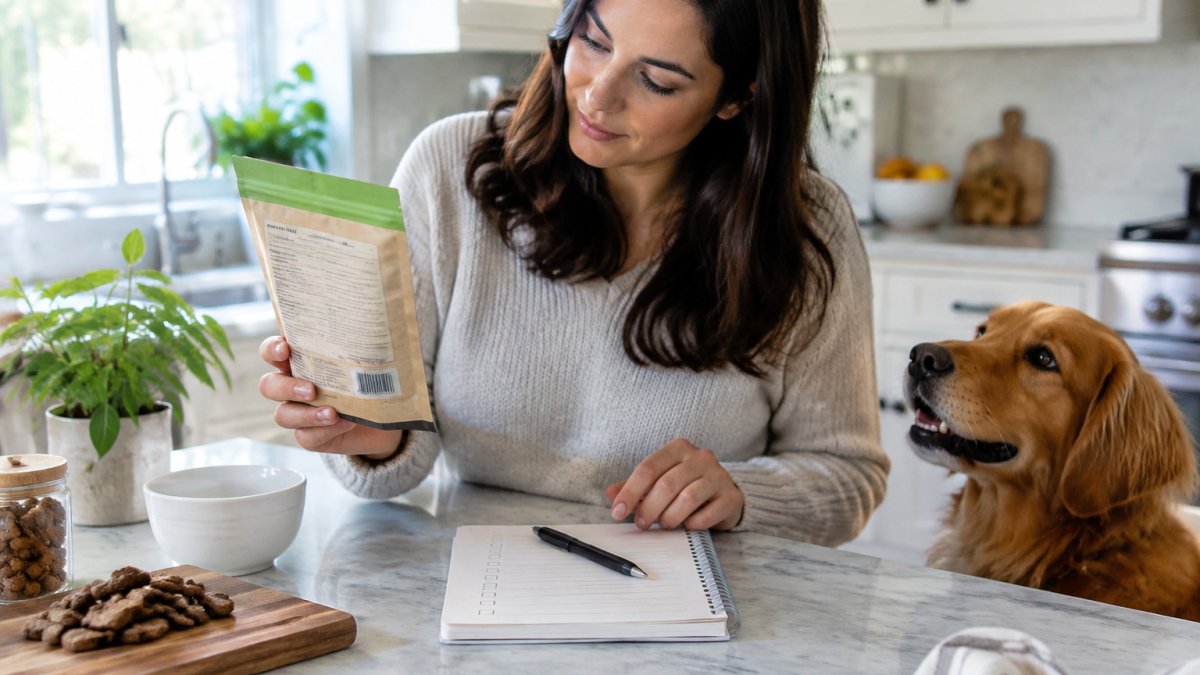
- Record the product details. Write down the brand, product name, flavor, net weight, the "best by" date and every code printed on the bag. Photograph the back panel and the bottom seam before you recycle the packaging.
- List the named ingredients. Note each ingredient in the order it appears on the label. Mark the first five, since they make up most of the treat by weight.
- Flag vague terms. Circle any ingredient that does not name a species or a food, "meat meal," "animal digest," "natural flavor," "broth." These are the terms that will require supplier records to resolve.
- Locate the lot code. Look on the bottom seam, the back panel near the guaranteed analysis, or the crimped edge of the bag. Lot codes are usually a short string of letters and numbers, often with a date embedded. Write it down exactly, including any spaces or dashes.
- Check certifications. Look for a USDA Organic seal and note the certifier name printed near it. Certification is tied to the handler or manufacturer, not to a specific farm, so it confirms a process rather than an origin.
- Contact the manufacturer in writing. Use email or a web form so you have a dated record. Ask the questions in the next section and reference the lot code.
- Save the answers. Keep the reply, the date, the name of the person who responded and any documents they attach. If they send a supplier letter or certificate, file it with your photos of the bag.
- Compare the answers to the label. If the reply names a country or region that does not match the label's claims, or if it repeats marketing language instead of answering, ask a follow-up question that names the specific ingredient and lot.
Using Batch Codes and Lot Numbers
A lot code is the bridge between a bag on your shelf and a production record. It typically identifies the facility, the production date and the run. That is enough for a manufacturer to pull the receiving records for the ingredients used in that run, but only if the manufacturer keeps lot-level records, which not every co-packer does.
What a lot code can tell you:
- When and where the treat was made.
- Which production run the bag belongs to, which matters for recalls.
- Whether two bags you bought months apart came from the same run.
What a lot code cannot tell you on its own:
- Which farm grew the sweet potato or raised the chicken.
- Whether an ingredient was swapped between runs.
- Whether a supplier's own documentation is accurate.
Watch out: a manufacturer that answers "all our ingredients are high quality" without naming a supplier, a region or a receiving record has not traced anything, it has restated the label.
Traceability Documentation and Chain of Custody
Traceability is a paper trail, not a feeling. In practice, a credible manufacturer can produce three layers of records on request:
- Supplier documentation: a letter or certificate of analysis from the ingredient supplier naming the ingredient, the supplier and the country of origin.
- Receiving records: the log showing when that supplier's shipment arrived at the plant and which lot it was assigned.
- Lot or batch records: the production record showing which receiving lots went into the run that produced your bag.
Chain of custody means those three layers link up: the supplier lot on the receiving log matches the lot on the batch record, and the batch record matches your code. Most small brands can produce the first layer and the third; the middle layer is where gaps appear, especially when a co-packer handles receiving.
A common pattern is that brands with a single production facility and a short supplier list can answer lot-level questions in a few days, while brands that broker through importers often cannot name the original farm at all. Neither answer is automatically disqualifying, but the difference tells you how much verification is actually possible.
The workflow runs in eight steps, each producing a record you can keep.
| Step | What to do | Time or frequency |
|---|---|---|
| 1. Record product details | Note brand, name, flavor, net weight, best-by date and codes | Before recycling the bag |
| 2. List named ingredients | Note each ingredient in label order; mark the first five | Once per product |
| 3. Flag vague terms | Circle terms like "meat meal" or "natural flavor" | Once per product |
| 4. Locate the lot code | Find it on the bottom seam, back panel or crimped edge | Once per bag |
| 5. Check certifications | Look for USDA Organic seal and certifier name | Once per product |
| 6. Contact the manufacturer | Email or web form so you have a dated record | Once per lot code |
| 7. Save the answers | Keep reply, date, responder name and attached documents | Every reply |
| 8. Compare answers to label | Ask a follow-up if origin does not match the claims | Every reply |
Questions to Ask Manufacturers and What Credible Answers Look Like
Good questions get specific answers. Send them in writing, reference the lot code, and ask for the answer in writing so you can compare it against the label later.
Questions to Ask
Ingredient origin
- For each of the first five ingredients, what country or region was it grown or raised in?
- Which ingredient supplier provided it, and is that supplier the grower or a broker?
- Has the origin changed in the last 12 months?
Processing and facilities
- Which facility made this lot, and is it owned or contracted?
- Is the treat cooked, baked or extruded, and at what temperature?
- Are any ingredients sourced from a facility that also handles allergens you disclose?
Documentation
- Can you match this lot code to the receiving records for its ingredients?
- Do you hold a current USDA Organic certificate for this product, and who is the certifier?
- Can you share a supplier letter or certificate of analysis for the protein source?
Recalls and records
- How do you notify customers if a lot is recalled?
- How long do you keep lot records, and can you retrieve them for a bag bought six months ago?
What a Credible Answer Looks Like
A credible reply names specifics. It should include:
- A country or region for each named ingredient, not a general claim like "responsibly sourced."
- A supplier type, grower, co-op, importer, even if the supplier name is confidential.
- A certifier name and certificate number if organic is claimed.
An answer that repeats the label, cites "high standards" or "quality ingredients," or declines to name any origin is not a traceability answer. It may still be an honest brand with a short paper trail, but you have not verified anything.
Watch out: a reply that names a country but not a supplier can still be accurate, many brands buy through importers and genuinely do not know the farm.
Red Flags in Manufacturer Replies
- Answers that arrive instantly and identically for every product, suggesting a template.
- Claims that a certification covers the whole product when the seal applies only to certain ingredients.
- Refusal to confirm whether a lot code was checked.
Keep the reply with your photos of the bag. If the same product later shows a different origin, you have a record of what was claimed at the time of purchase.
Checking Whether a Dog Treat Is Organic and Certified
Organic certification is one of the strongest proofs a treat can show. In the United States, the USDA Organic seal means the product meets the National Organic Program standards. USDA National Organic Program standards
Look for the seal on the package, then confirm it with the certifier if you want more proof. A certified product should be traceable to certified ingredients.
Dog Mamma's publishes its certification details. Our Third-Party Certification for Dog Treats: A Step-by-Step Guide explains how to verify organic and certification claims for any treat. You can also read about why USDA Organic certification matters for our recipes.
Dog Treat Ingredients to Avoid and Red-Flag Terms
Some terms deserve a closer look before you buy.
- Meat meal or by-products without a named species
- Artificial preservatives such as BHA or BHT
- Vague flavors like "natural flavor" with no further detail
Some ingredients are common in treats but hard to trace. Others are easy to verify with supplier records. Know which is which before you decide.
Some treats also hide synthetic preservatives in the fine print. Do your dog treats hide synthetic preservatives? walks through what to look for.
For a GMO check, see how Dog Mamma's achieved Non-GMO Project verification for its oven-baked treats.
Verifying Traceable Dog Treats and Putting the Checklist to Work
Use the workflow above on any treat you are considering. Here is a short checklist to keep handy:
- Named ingredients listed clearly
- First three ingredients are whole foods
- No unexplained vague terms
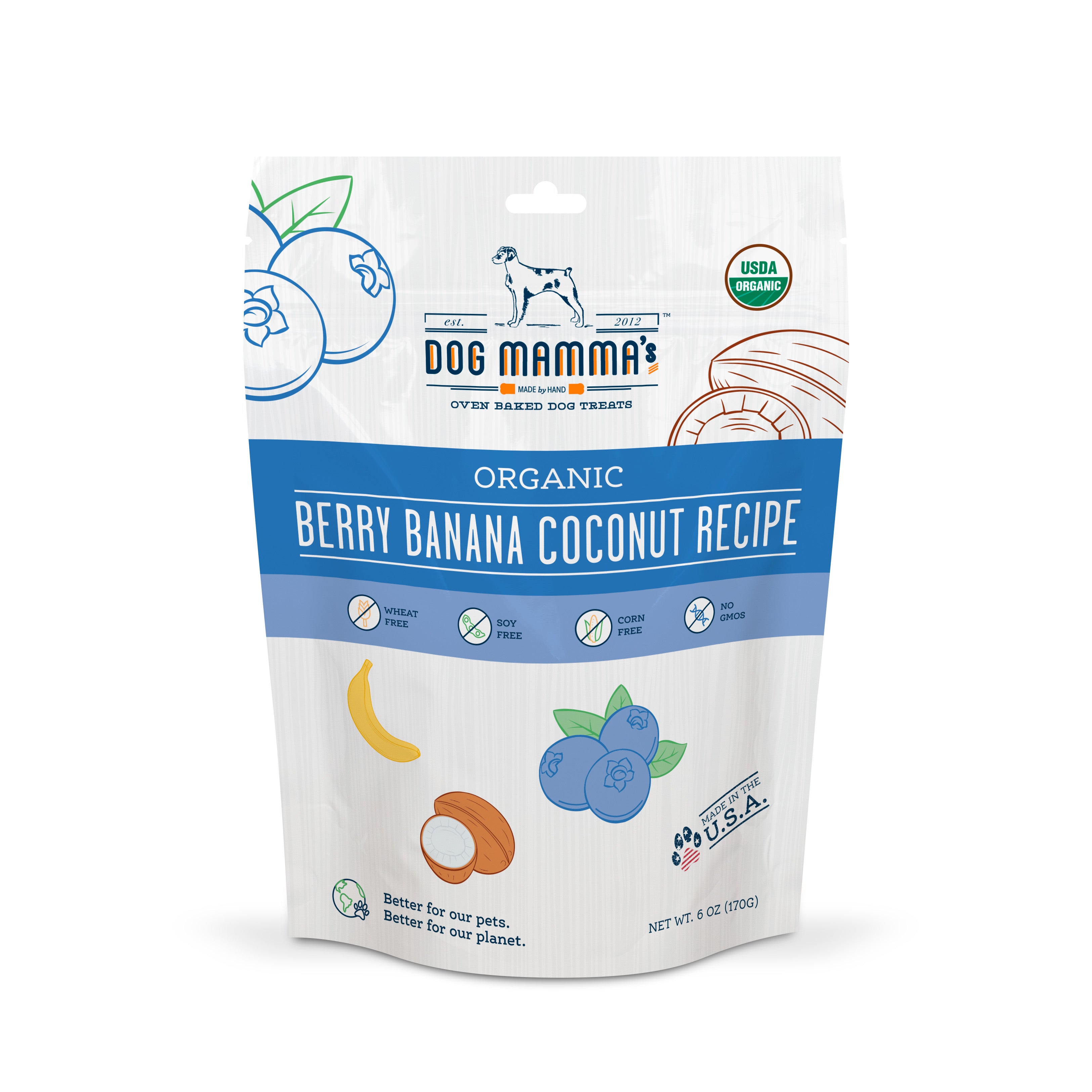
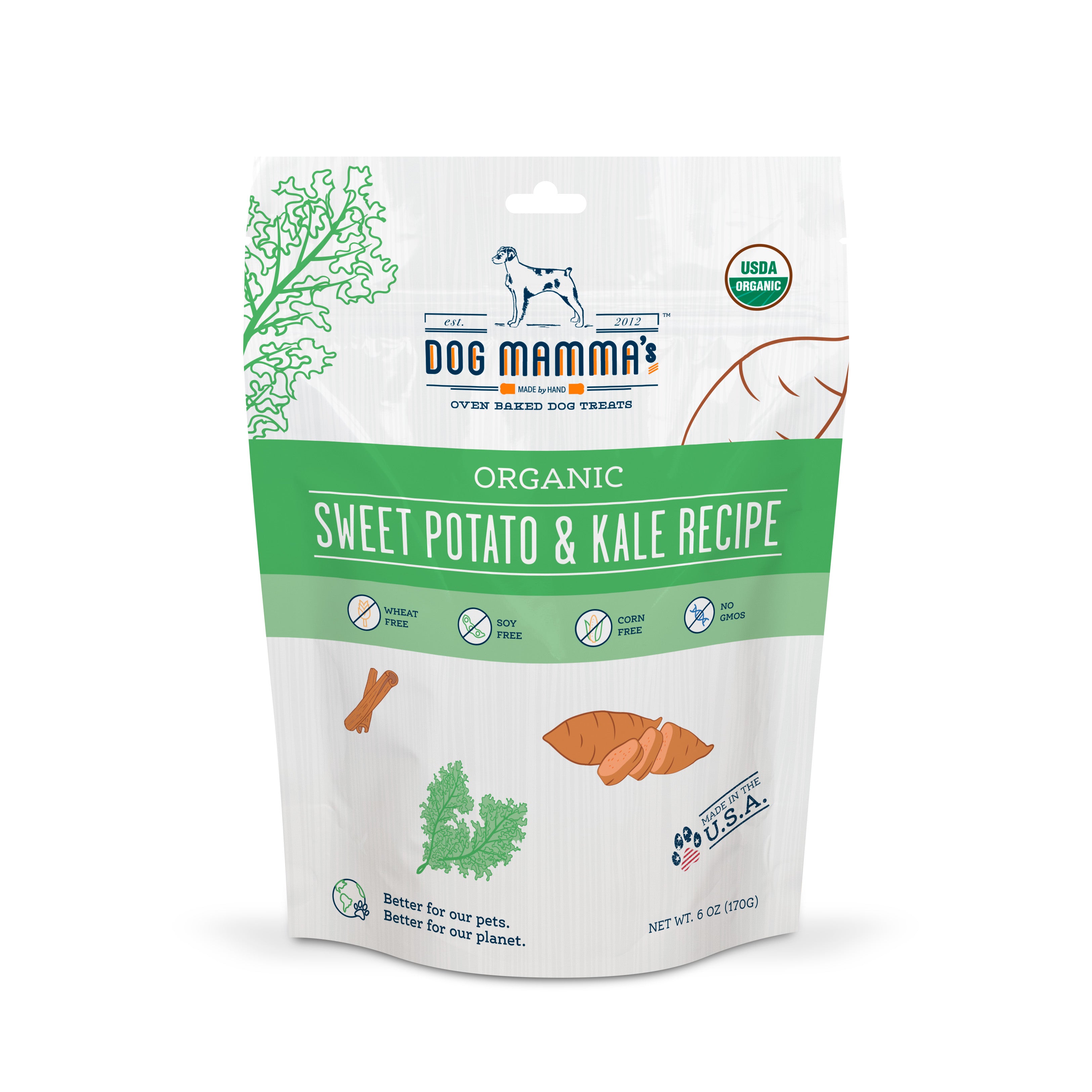
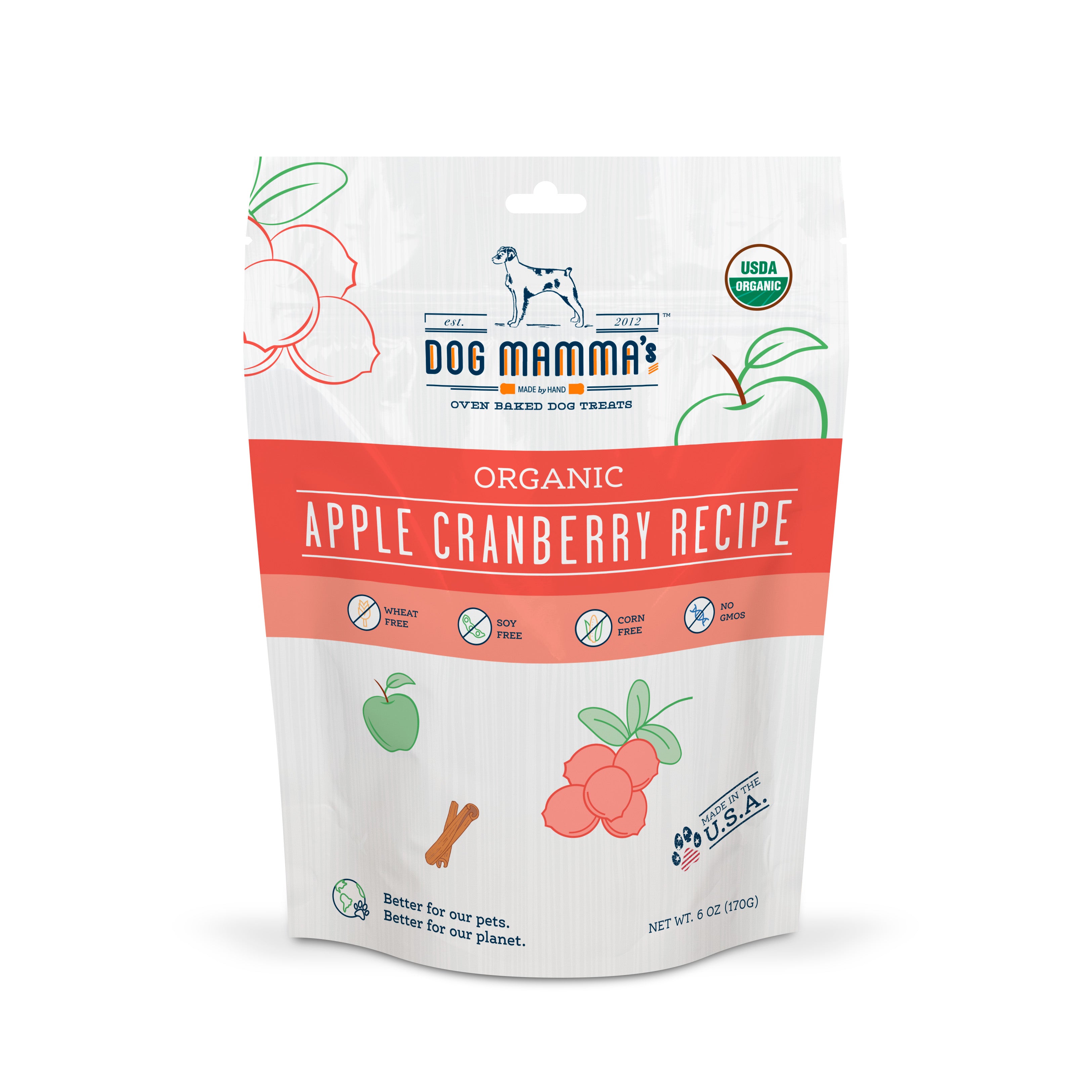
After working through the checklist, you can compare labels against real criteria. Our USDA Organic Berry Banana Coconut treats are a good example to test the checklist on. The Sweet Potato & Kale recipe and the Apple Cranberry recipe follow the same certified approach.
Traceability is one part of choosing a good treat. Quality and safety matter too, and a traceable ingredient list does not replace them. Use the checklist as a starting point, then ask questions until the answers are clear.
Shop with us to find the recipe that fits your dog.
Frequently Asked Questions
How can I tell where the ingredients in dog treats come from?
Start with the label, which lists ingredients by weight but does not establish origin. Then look for a batch or lot code and contact the manufacturer to ask for supplier records, batch tracking and origin verification for the specific ingredients. A clear, specific answer that names suppliers or countries of origin is a good sign. Vague replies such as 'globally sourced' are not verification, and you should treat them as unconfirmed.
What should I look for on a dog treat ingredient label?
Look for named ingredients such as chicken, sweet potato or beef liver rather than vague terms like meat meal or meat by-products. Check the order, since ingredients are listed by weight, and read the guaranteed analysis for protein, fat and fiber. Note whether a USDA Organic seal appears, and confirm the batch code is printed on the package so you can follow up with the manufacturer if needed.
How can I check whether a dog treat is organic?
In the United States, a USDA Organic seal means the product met USDA National Organic Program requirements. Verify the claim by checking the certifying agent's name and the certificate number, where the company provides them. The seal should match the ingredients, meaning organic claims on the front should be backed by organic ingredients listed on the back. Ask the manufacturer for its organic certificate if the package does not show one.
