
Sustainable Dog Treats for Puppies: A Buying Guide
Last Updated: November 22, 2026
Quick Summary
Sustainable dog treats for puppies must be small enough to avoid choking, made with named whole ingredients, and backed by third-party certification rather than green imagery. Keep treats to about 10 percent of your puppy's daily calories and switch to new treats gradually over about a week.
- Puppies under six months need treats no bigger than a pea, and crunchy treats should break cleanly.
- The U.S. pet treats market reached $13.5 billion in 2026, per Petfood Industry's market report.
- AAFCO's Model Pet Food Regulations do not require treats to meet nutritional adequacy requirements.
- Shameless Pets launched in 2017 making treats from human food supply discards, per Sierra Club.
- Each Dog Mamma's 6 oz bag is $10.49, and you should start with one small bag and one recipe.
Table of Contents
- Why Sustainable Dog Treats for Puppies Need a Different Checklist
- What to Look for in Sustainable Puppy Treat Ingredients
- How Eco Friendly Dog Treat Brands Prove Their Claims
- The Benefits of Small Batch Dog Treats for Growing Puppies
- Organic Puppy Training Treats: Calorie Budgeting and Reward Value
- Comparing Dog Mamma's Organic Puppy Treat Recipes
- Transitioning a Puppy to New Treats Without Stomach Upset
- Choosing Your First Bag of Sustainable Puppy Treats
- Frequently Asked Questions
Why Sustainable Dog Treats for Puppies Need a Different Checklist
Sustainable dog treats for puppies demand a stricter checklist than adult treats, because a growing puppy's body and bite size change fast. The U.S. pet treats market reached $13.5 billion in 2026, according to Petfood Industry's market report, and puppy owners are shopping that aisle with different needs than adult-dog owners.
At Dog Mamma's, we bake small-batch, USDA Organic Certified treats. Three things separate a puppy pick from an adult pick: size, texture, and calorie share of a small daily diet.
Size, Texture and Choking Risk in Puppies Under Six Months
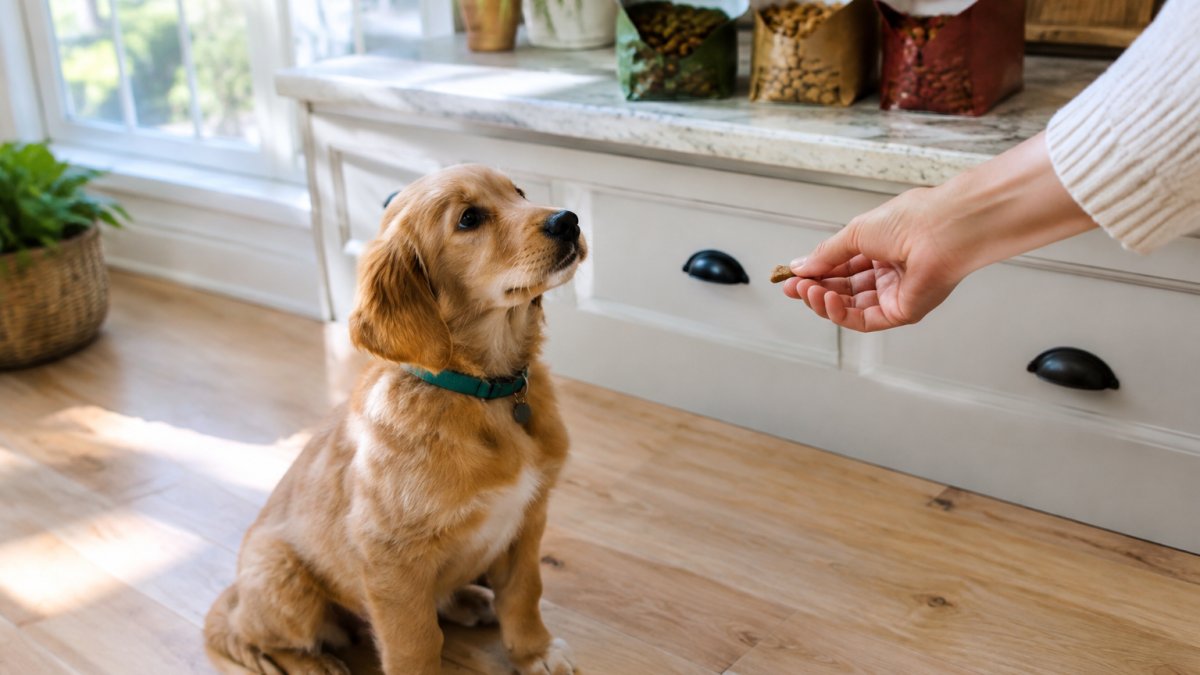
Small breeds and puppies under six months need treats no bigger than a pea, and crunchy textures should break cleanly rather than splinter. A treat that is fine for a 60-pound adult can be a choking hazard for a 6-pound puppy.
Watch out: a hard, oversized chew can crack a puppy's baby teeth or lodge in the throat. Break treats into smaller pieces and supervise every chew until your puppy is past the teething stage.
What to Look for in Sustainable Puppy Treat Ingredients
Ingredient labels tell you more about a treat than the front of the bag. Look for named whole foods, a stated protein or plant source, and a short ingredient list you can read aloud without stumbling.
The Association of American Feed Control Officials notes that its Model Pet Food Regulations do not require treats to meet nutritional adequacy requirements. Treats are a supplement to a complete diet, not a replacement, so puppy food still carries the nutrition load.
Reading the Label: USDA Organic, Human-Grade and Single-Ingredient Claims
USDA Organic means the product meets the USDA's National Organic Program standards for production and handling.
How Eco Friendly Dog Treat Brands Prove Their Claims
Eco friendly dog treat brands prove their claims with third-party certification, published sourcing, and packaging detail, not with green imagery. Ask for the certifying body, the audit standard, and where the ingredients were grown.
Research indexed by PubMed Central found that sustainability, ethical values, and animal-welfare concerns influence some owners' pet food choices. That interest is real, but it makes verification more important, not less.
Packaging, Food Waste and Upcycled Ingredients
Packaging is where many sustainability claims fall apart. Recyclable, compostable, and plastic-reduced formats mean different things, and only some are verifiable.
Upcycled ingredients, made from food supply discards, are one of the clearest ways to cut food waste. Shameless Pets launched in 2017 making dog and cat treats from human food supply discards, per Sierra Club's sustainable pet brand roundup. If you want a shortlist to compare against these proof criteria, see our guide to the 7 best eco friendly dog treat brands, and for a deeper walkthrough of verification, read our step-by-step guide to third-party certification for dog treats.
The Benefits of Small Batch Dog Treats for Growing Puppies
Small batch production means shorter runs, fresher treats, and tighter control over every ingredient that goes in the oven.
If you are sold on the approach, our guide to buying small batch dog treats walks through what to check before you buy.
Organic Puppy Training Treats: Calorie Budgeting and Reward Value
Training treats only work as a sustainable habit if they fit inside your puppy's daily calorie budget. A common guideline among veterinarians and trainers is to keep treats to no more than about 10 percent of a puppy's daily calories, with the remaining 90 percent coming from a complete and balanced puppy food. That 10 percent ceiling is the number to plan around, not a target to hit every day. Keeping that ceiling in mind makes it easier to choose small, easy-to-portion rewards, and a practical selection guide can help you weigh training treats against your puppy’s daily needs.
Here is how to turn that into a working number. Find the calorie content on your puppy food's label, usually stated as kilocalories per cup or per can (kcal/cup or kcal/can). Multiply by the amount you feed daily to get total daily calories from food. Then calculate 10 percent of that total, that is your treat allowance for the day.
A worked example: if your puppy eats 1.5 cups of a food labeled at 400 kcal/cup, that is 600 calories from food per day. Ten percent is 60 calories of treats. If a training treat is 3 calories, that is about 20 rewards in a day, enough for two short sessions, not an all-day supply.
That math changes how you buy and break treats:
- Smaller pieces mean more rewards per calorie. A 10-calorie biscuit broken into quarters gives four 2.5-calorie rewards. The puppy gets four chances to earn a reward; you spend the same calories.
- High-value does not have to mean high-calorie. Reward value comes from smell, texture, and novelty as much as from fat or sugar. A tiny piece of a strong-smelling treat often outperforms a larger bland one.
- Reserve the best treats for hard behaviors. Use ordinary pieces for easy cues and the highest-value reward for recalls, crate training, and leash manners.
- Count training treats against the daily allowance, not on top of it. If you train heavily one day, reduce the treat portion at other times or trim the food portion slightly, but do not cut puppy food below the label's feeding guide without veterinary guidance.
Watch out: puppies on a growth chart need consistent nutrition, and treats are the easiest place to accidentally unbalance the diet. If training is intense, ask your veterinarian whether to use part of the puppy's regular kibble as training rewards, which keeps calories and nutrition in balance.
Reward value is the other half of the equation. Test a small bag before committing to a large one. Rotate two or three flavors so the reward stays novel, and keep the highest-value option for the behaviors you most need to reinforce.
Comparing Dog Mamma's Organic Puppy Treat Recipes
Each 6 oz bag is $10.49.
- Organic Berry Banana Coconut Recipe ($10.49): Baked with antioxidant-rich organic blueberries, sweet organic bananas, and crispy organic coconut flakes with a dash of cinnamon. Best for puppies who like fruity flavors.
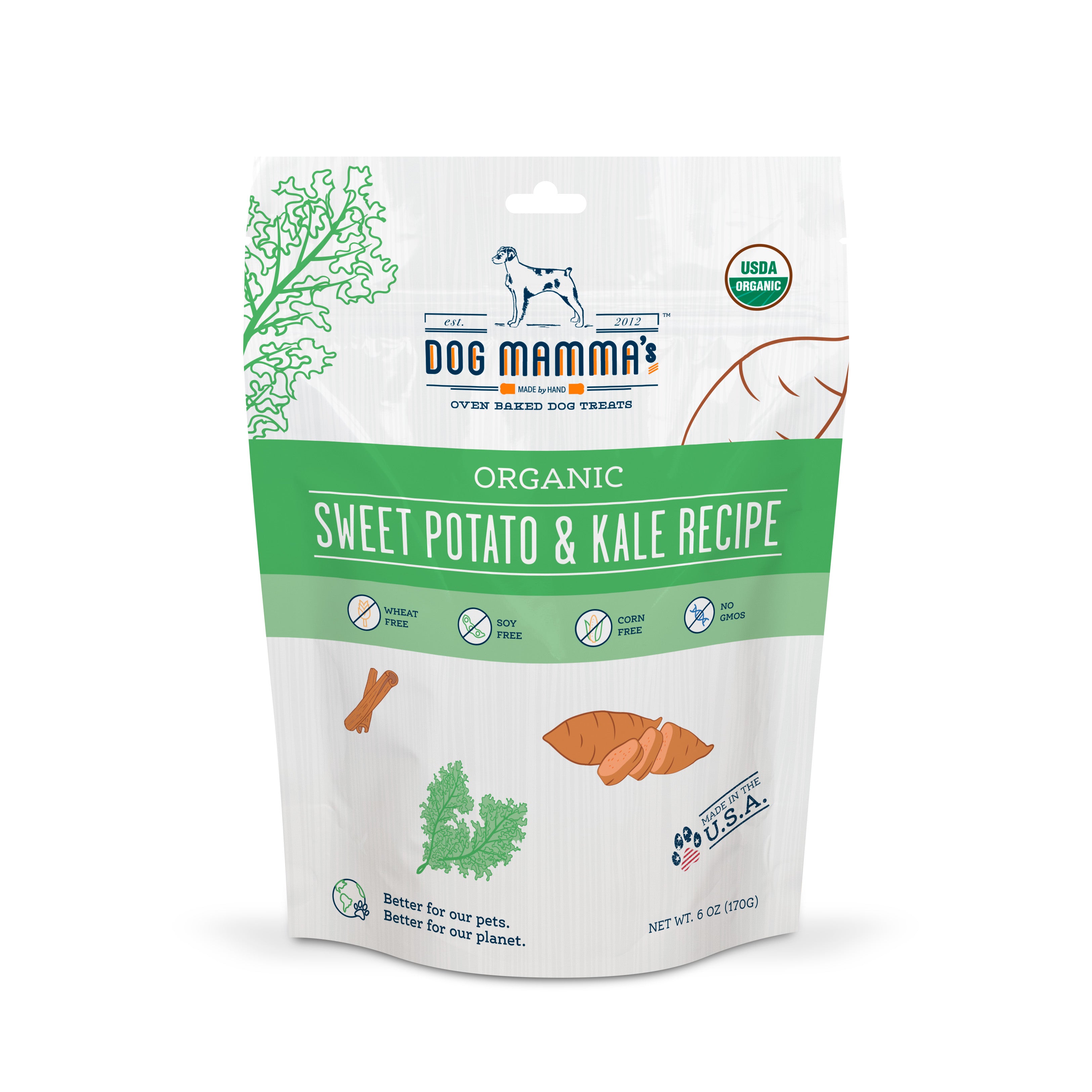
- Organic Sweet Potato & Kale Recipe ($10.49): Organic sweet potato and superfood organic kale, with jumbo pieces of dark leafy kale visible in each bite. Best for puppies already eating vegetable-based foods.
- Organic Apple Cranberry Recipe ($10.49): Sweet organic apples, tart organic cranberries, and organic cinnamon, described as tasting like homemade apple pie. Best for picky eaters who need a stronger flavor.
| Recipe | Price | Key Ingredients | Best For |
|---|---|---|---|
| Berry Banana Coconut | $10.49 | Organic blueberries, banana, coconut | Fruity-flavor fans |
| Sweet Potato & Kale | $10.49 | Organic sweet potato, kale | Veggie-friendly puppies |
| Apple Cranberry | $10.49 | Organic apples, cranberries, cinnamon | Picky eaters |
You can view the Organic Sweet Potato & Kale recipe to see the full product detail.
Transitioning a Puppy to New Treats Without Stomach Upset
Switch treats gradually over about a week, mixing a small piece of the new treat with the old one and watching for loose stool or itching.
Start with a quarter of the new treat alongside three-quarters of the old, then shift the ratio every two to three days. Stop and return to the old treat if you see diarrhea, vomiting, or scratching, and check with your veterinarian before trying again.
Our 7 steps to switch dog treat brands without upset covers the full schedule.
Choosing Your First Bag of Sustainable Puppy Treats
Start with one small bag, one recipe, and one training session to see how your puppy responds before you stock up. Sustainable dog treats for puppies are only worth the price if your dog eats them.
At Dog Mamma's, we bake in small batches with USDA Organic Certified ingredients, and every recipe comes in a 6 oz bag at $10.49. Rotate flavors once you know what your puppy likes, and keep treats a small, supervised part of a complete diet.
Picking the right first treat should not feel like a gamble. Dog Mamma's makes it simpler with USDA Organic Certified recipes, small-batch handcrafted production, and plant-based ingredients free from pesticides and GMOs. Get started with Dog Mamma's and give your puppy clean, sustainable rewards from the first bag.
Frequently Asked Questions
What are the healthiest dog treats for puppies?
The healthiest puppy treats are small, low-calorie and made from recognizable ingredients. Look for USDA Organic certification, human-grade sourcing and short ingredient lists. AAFCO's Model Pet Food Regulations do not require treats to meet nutritional adequacy standards, so treats should stay a reward, not a meal replacement.
What is the 90/10 rule for puppy treats?
The 90/10 rule means 90% of a puppy's daily calories come from a complete, balanced diet and no more than 10% come from treats. For a growing puppy, that 10% adds up fast because treats are calorie-dense. Break crunchy treats into smaller pieces, count them against the day's total and reduce meal portions slightly on heavy training days. Ask your veterinarian to confirm the split for your puppy's size and growth rate.
Are plant-based treats safe for growing puppies?
Plant-based treats can fit a puppy's diet when they are used as rewards alongside a complete puppy food, not as the main protein source. Puppies need adequate protein and amino acids for growth, so the base diet matters more than the treat. Choose treats with transparent ingredient lists and USDA Organic certification where possible, and introduce any new treat slowly over several days while watching for digestive changes.
How do small-batch treats differ from mass-produced options?
Small-batch treats are made in limited production runs. Check certification and sourcing claims on the label before you buy.
What should I look for in sustainable puppy treat labels?
Start with third-party certification such as USDA Organic, then check for human-grade ingredients, named protein or produce sources and a clear country of origin. Look for eco friendly dog treat brands that disclose packaging materials and whether ingredients are upcycled from the food supply. Avoid vague terms like natural with no backing. A short ingredient list you can trace beats a long list of marketing claims every time.
