
7 Steps to Switch Dog Treat Brands Without Upset
Last Updated: November 2, 2026
Quick Summary
To switch dog treat brands without upsetting your dog, compare ingredient lists first, then introduce the new treat one occasion at a time over about two weeks. Keep the old and new treats in separate bags and watch stool, skin and appetite every day. If stool worsens or vomiting appears, return to the old brand.
- Compare the old and new ingredient lists side by side before buying.
- Swap one treat occasion at a time, with the old treat as the default during days 1 to 3.
- Never mix old and new treats in the same bag or bowl.
- Use pieces about pea-sized for small dogs and nickel-sized for large dogs during the switch.
- Stop the new treat and call your vet for vomiting, bloody stool, or repeated refusal to eat.
Table of Contents
- Why Switching Dog Treat Brands Can Upset Your Dog
- Step 1: Check the Ingredients of Your Current and New Treats
- Step 2: Work Out How Many Treats Your Dog Should Have Per Day
- Step 3: Introduce the New Treat Gradually
- Step 4: Watch for Signs of Food Intolerance in Dogs
- What to Do If Your Dog Reacts to a New Treat
- Special Cases: Sensitive Stomachs, Allergies and Training Treats
- Starting Your Switch to Dog Mamma's Treats
- Frequently Asked Questions
Why Switching Dog Treat Brands Can Upset Your Dog
Switching dog treat brands is one of the most common ways dogs end up with loose stools or an itchy belly. The treat is small, but its ingredients can be very different from what your dog is used to. Most dogs handle a change well when it is planned, and the rest of this guide shows you how.
Pet treats are a big business in the United States. Mordor Intelligence estimates the U.S. pet treats market at USD 11.25 billion in 2026 (Mordor Intelligence U.S. pet treats market outlook). That means plenty of new options on store shelves, and plenty of reasons to try one.
Many treat purchases start on impulse, too. Morning Consult's pet-treat category research reports that nearly half of purchase occasions begin as an impulse to show affection (Morning Consult pet treat category research). Impulse buys often skip the label check, so it pays to slow down.
- Ingredients change: New proteins, grains, or fillers can trigger reactions.
- Calories change: A treat that is bigger or richer adds up fast.
- Texture changes: Crunchy versus soft can change how much a dog chews and swallows.
Step 1: Check the Ingredients of Your Current and New Treats
Start by comparing the two ingredient lists side by side before you commit to any of the switch dog treat brands options on your list. Look for new proteins, new starches, and anything your dog has never eaten before. To learn how to spot hidden synthetic preservatives that could trigger a reaction, check the full label. Dog Mamma's Organic Peanut Butter Banana Recipe is baked with organic peanut butter and sweet organic bananas (Dog Mamma's Organic Peanut Butter Banana Recipe).

Write down every ingredient your dog currently gets from treats. Then check the new bag against that list. Ingredients you already know are a good sign.
Watch out: Many "natural" labels hide long lists of additives. Read the full ingredient panel, not the front of the bag.
Step 2: Work Out How Many Treats Your Dog Should Have Per Day
Treats should stay a small share of your dog's daily food. Most guidance suggests keeping them to a small fraction of total daily calories, and the exact limit depends on your dog's size, age, and activity. Check your vet's guidance before you set a number, because the right amount varies widely.
Count treats the same way you count meals. A handful of training treats during a walk can add up across the day, especially with a higher-calorie brand. Use a smaller piece when you are training.
Step 3: Introduce the New Treat Gradually
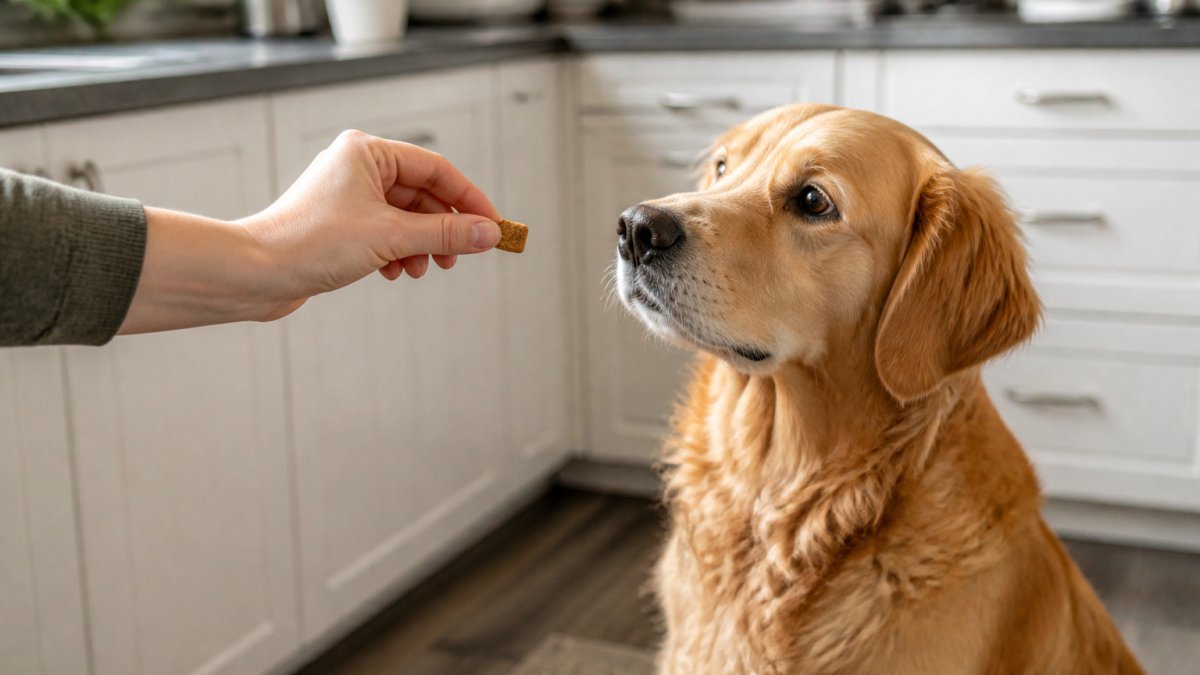
Treat transitions are not the same as food transitions, so a practical approach is to swap one treat occasion at a time rather than blend two bags together.
A treat-by-treat schedule that works for most dogs:
- Days 1-3: Keep the old treat as the default. Offer one piece of the new treat once a day, ideally at the same time you would normally give the old one. Everything else stays the same.
- Days 4-6: If stools are normal and there is no itching or gas, give the new treat at one regular treat occasion (for example, the after-walk treat) and keep the old treat for all other occasions.
- Days 7-10: Replace a second treat occasion with the new brand. Keep training treats on the old brand if your dog does a lot of training, because training sessions involve many repetitions and a new treat there can add up fast.
- Days 11-14: Finish the swap by replacing the remaining old-treat occasions, one at a time, every two to three days.
This is a starting point, not a rule. A dog with a sensitive stomach may need two to three weeks; a young, healthy dog with a cast-iron gut may finish in a week.
Do not mix old and new treats in the same bag or bowl. Unlike kibble, treats are eaten as discrete items, and mixing them makes it impossible to know which treat your dog reacted to. Keep the old bag and the new bag separate and hand out one or the other.
Size matters more than brand. A new treat that is twice the size of the old one delivers twice the calories and twice the ingredient load per piece. If the new treat is larger, break it into pieces roughly the size of the old treat for the first two weeks.
Keep training treats small and boring during the switch. High-value training treats are often richer and higher in calories than daily snacks. If you are switching daily treats, leave the training treat alone until the daily switch is complete, then repeat the same one-occasion-at-a-time process for training treats.
The schedule below breaks the switch into four phases, each with a daily check, so you can see how far the new treat has moved into the rotation.
| Phase | What to do | Timing |
|---|---|---|
| Days 1-3 | Offer one piece of the new treat once a day; keep the old treat as default | Days 1-3 |
| Days 4-6 | Give the new treat at one regular occasion; keep the old treat for the rest | Days 4-6 |
| Days 7-10 | Replace a second occasion; keep training treats on the old brand | Days 7-10 |
| Days 11-14 | Replace remaining old-treat occasions one at a time | Every 2-3 days |
Step 4: Watch for Signs of Food Intolerance in Dogs
Treat-related reactions can show up within a few days of the first piece, which is why the one-treat-at-a-time schedule in Step 3 matters. Your job during the switch is to check three things daily: stool, skin, and appetite.
Dog Mamma's Organic Peanut Butter Banana Recipe - USDA Organic Certified Dog →
Stool check. Use a simple 1-to-5 scale each day:
- 1: Firm, holds shape, easy to pick up.
- 2: Firm but leaves a little residue.
- 3: Soft, loses shape when picked up, but not liquid.
- 4: Pasty, spreads, leaves residue.
- 5: Liquid, no shape.
A move from your dog's normal score to one step softer for a single day is common and usually not a reason to stop. A move of two steps, or any score of 4 or 5 that lasts more than 24 hours, means stop the new treat and go back to the old brand.
Skin check. Run your hands over the dog's belly, ears, and paws once a day. New redness, warmth, or a sudden increase in scratching, licking, or ear rubbing is a sign the new treat may not agree with your dog.
Appetite and energy check. A dog that suddenly refuses the new treat, picks it up and drops it, or seems less interested in meals may be telling you something.
When to stop the new treat and call your veterinarian:
- Vomiting more than once in 24 hours, or any vomiting with blood.
- Diarrhea that lasts more than 24 hours, or any diarrhea with blood or black, tarry stool.
- Repeated refusal to eat for more than one day.
- Hives, facial swelling, or difficulty breathing, this is an emergency; stop the treat and call your vet or an emergency clinic immediately.
- Lethargy or weakness that is not explained by heat or exercise.
When to stop the treat but you can probably wait:
- A single soft stool with no other signs.
- Mild gas or a slightly rumbling belly for a day.
- One episode of scratching after a new treat that resolves within a few hours.
In those milder cases, stop the new treat, return to the old brand, and wait three to five days for things to settle. If you want to try again, wait at least two weeks and start with a single piece, not a full occasion.
Keep a simple log. A notebook or phone note with four columns, date, treat given, stool score, and any skin or behavior notes, turns a vague "he seems off" into a pattern you can show your vet.
What to Do If Your Dog Reacts to a New Treat
Stop the new treat right away if your dog shows signs of upset. Go back to the last treat that caused no problems and wait until things settle. Then try again later, if at all.
Call your veterinarian if symptoms are severe, persist, or include blood, repeated vomiting, or extreme lethargy. Do not wait it out in those cases.
Special Cases: Sensitive Stomachs, Allergies and Training Treats
Dogs with sensitive stomachs or allergies need extra care. Before choosing a new brand, read our allergy-friendly treat options for allergic dogs. For a dedicated guide to treats suited to digestive issues, see our sensitive stomach picks. Make changes slower and keep the new treat as the only variable.
For training, a high-value treat can be a different size and texture from a daily snack. Keep training treats small so they do not add up to too many calories. If your dog is in agility or another canine sport, talk to your vet about the right balance.
Starting Your Switch to Dog Mamma's Treats
If you are ready to try a new option, Dog Mamma's Organic Sweet Potato & Kale Recipe is a tasty combination of organic sweet potato and organic kale (Dog Mamma's Organic Sweet Potato & Kale Recipe).

Start with one or two pieces a day, follow the steps above, and keep a log. We recommend this approach for any brand, because a steady, watched switch is what keeps your dog comfortable.
Last Updated: November 2, 2026
Frequently Asked Questions
How do I switch my dog to a new treat brand?
Replace a small portion of the usual treats with the new brand for the first few days, then gradually increase the share until the new treat makes up the full allowance. Most owners do this over about seven days, but a dog with a sensitive stomach may need longer. Keep the total number of treats the same during the switch so the change is only in the ingredients, not the amount. Check stool each day, and pause the increase if soft stools or vomiting appear. Dog Mamma's Organic Apple Cranberry Recipe is one option to try once your dog tolerates the first few days.
Can changing dog treats cause diarrhea?
Yes. A new ingredient, a different fat level or a sudden jump in quantity can loosen stools, especially in dogs with sensitive digestion. Mild, short-lived changes often settle within a day or two when the new treat is reduced or paused. Diarrhea that lasts more than a day, includes blood, or comes with vomiting, lethargy or loss of appetite needs a call to your veterinarian. Switching slowly and keeping treat portions modest lowers the chance of upset.
How many new treats should I give my dog at first?
Start with only a few pieces a day of the new treat, mixed in with the usual ones. A small starting amount lets you see how your dog responds before you increase it. As a general guide, treats should make up no more than about 10 percent of a dog's daily calories, but your veterinarian can give you a number for your dog's size and activity level. Once your dog handles the first few days well, you can increase the portion step by step.
